
Why The Most Popular Oil Analysis Test Ever Might Actually Be the Worst Over the years, oil analysis has gone from something adopted by just a few asset owners with critical components to a universal tool to achieve reliability. As oil analysis entered the...
Articles
How Long Should a Bearing Last?
The Evolution of Bearing Life Calculations and the ISO 281 Standard From slow-turning pillow block bearings to high-speed fan and electric motor bearings, rolling element bearings are the most common lubricated component in any industrial plant. The earliest known...
The Role of Temperature Control in Hydraulic Oil Reliability
The old battle cry in the hydraulics world is "flow makes it go." However, pressure determines the ability of actuators to move heavy loads. Therefore, flow and pressure together define the total power of the hydraulic system. Hydraulic Oil Viscosity Hydraulic oil...
Why Reliability is Failing
My focus is on what and how companies invest in their equipment to drive results. As someone who has worked in maintenance and reliability for more than 40 years, I enjoy learning about what is new. However, the reoccurring mistake in all equipment purchases is the...
Measuring and Attaining Sustainable Lubrication
Many companies utilizing rotating equipment have initiated or planned to create decarbonization strategies. The process reduces and compensates for the emissions of carbon dioxide equivalent (CO2e), ultimately down to "Net 0". Lubricants are an essential component in...
Oil Analysis Blunders: How to Avoid Mistakes in Sample Identification
Lubricants are the lifeblood of machines. Like a blood test, lubricant analysis can provide early warnings of impending failures, far in advance, before it is too late to take timely action. But not all oil samples can give such alerts completely! Only representative...
How Do Solid Lubricants Work?
Just as there are various states of matter, there are different lubricant types. The four main categories are gas, liquid, cohesive (grease), and solids. In the industrial lubrication world, we deal with fluids and greases, but some operating environments make these...
Lube Oil Varnish Detection and Control
Varnish is a type of deposit that forms on the surface of equipment in lubrication systems. It is caused by the oxidation of the base oil and the buildup of additives in the oil over time, forming a sticky, varnish-like substance. Lube oil varnish can cause problems...
ICML Recently Certified Professionals
Congratulations, new certificants! The International Council for Machinery Lubrication recognizes newly certified professionals who earned the following credentials between November 30, 2022, and January 31, 2023. ICML is a global non-profit organization dedicated to...
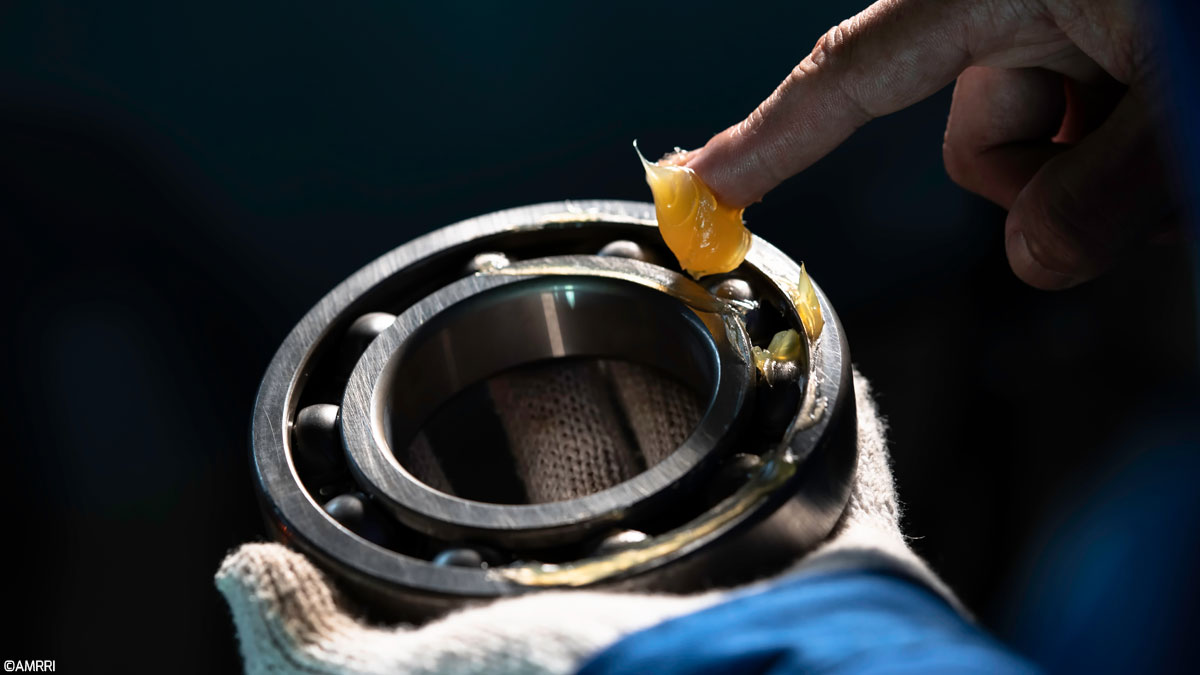
How Grease Analysis Helped Expose a Hidden Plant
Those who have worked in or around maintenance and reliability have probably heard about the hidden plant. This term refers to that portion of the productivity of any industry that, for some reason, is wasted and goes completely unnoticed in the eyes of the...