

Machinery Lubrication Level I — Pewaukee, WI
Four days of intensive training on industrial lubrication best practices — lubricant selection, storage, filtration, and application. Built for those pursuing MLT I / MLA I certification.
The likely answer is YES, it is highly likely that lubricant shortages are once again right around the corner!!
According to a recent article published by the Independent Lubricant Manufacturers Association, API Group III suppliers have begun placing customers on allocation, as well as shifting from contract to higher posted prices. ILMA anticipates that Group II refiners may be next as refinery economics incentivize a shift toward diesel production. (The ILMA article is provided at the end of this article.)
So what will a shortage mean for industrial equipment operators?
A Regional War, A Narrow Strait, and a Global Supply Chain
The news of 2026 has been dominated by a regional war in the Middle East, involving the US, Iran, Israel, and gradually drawing in other countries in the region. Along with the obvious difficulties associated with regional armed conflict, the war has had a focused and concentrated impact on the narrow opening between Iran and the Arabian peninsula known as the Straight of Hormuz.
A high-traffic and very narrow maritime passage, the straight provides the only route from the Persian Gulf to the open ocean, and with it, much of the world’s petroleum shipments. Prior to the start of the war, about 20% of the world’s liquefied natural gas (LNG) and 25% of seaborne oil trade was passing through the strait every year. It is also a major route of petroleum products for Europe and Asia, and the only maritime route for several Gulf countries including the UAE, Qatar, Bahrain, Kuwait, and Iraq.
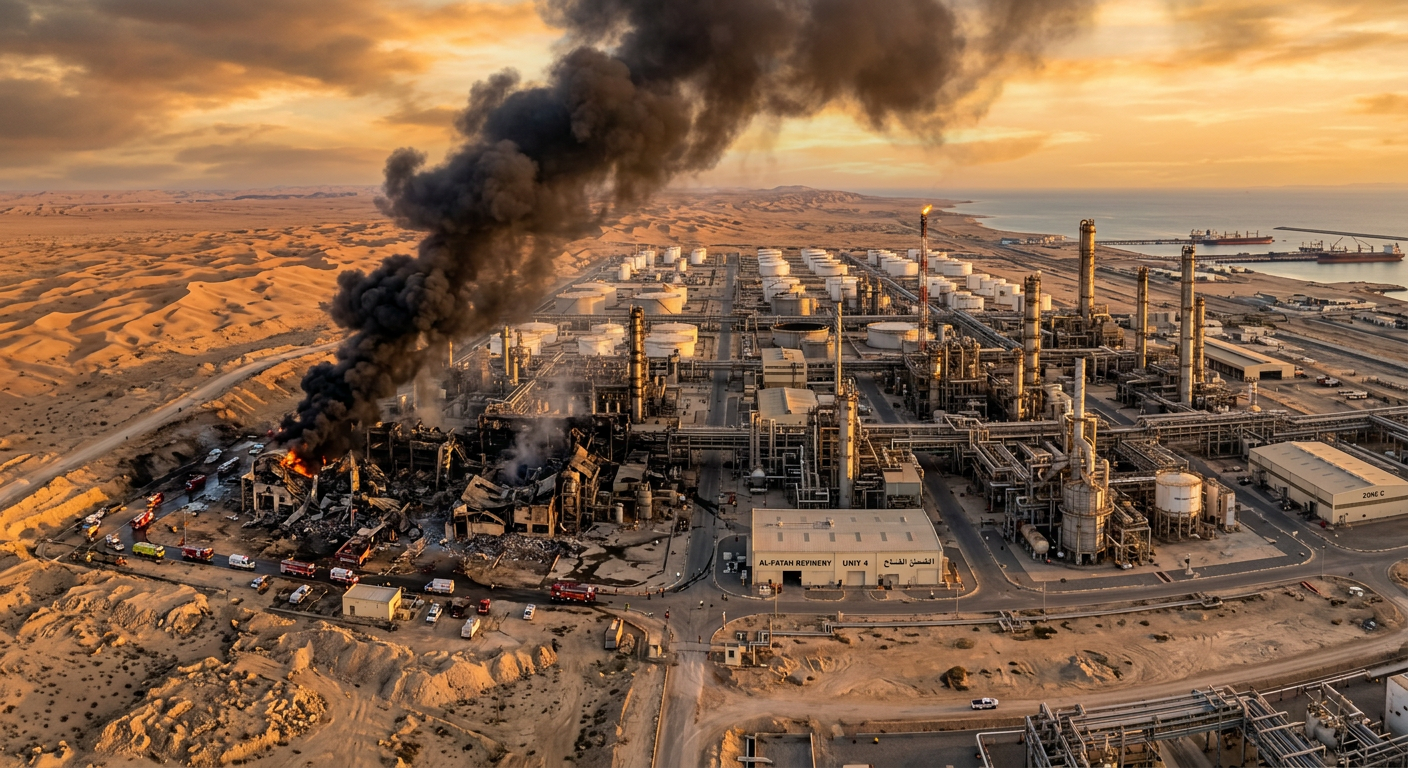
As Iran came under attack, the response included missile strikes on neighboring countries, including UAE, Kuwait, and Bahrain. More recently, escalation of hostilities has resulted in both a threatened “closure” of the straight by Iran, and countered shortly thereafter by an embargo of the region by the US Navy. Eventually, it became clear that the earlier missile strikes had disabled several key lubricant production facilities, including the ADNOC base oil facility in Abu Dhabi. Together, these impacts show the potential to specifically disrupt key formulated lubricant products to a degree never seen before.
The Industry Conversation Has Already Started
These developing factors became the topic of a late-scheduled, but well-attended special panel discussion at the recent STLE meeting in New Orleans. Moderated by Doug Sackett of Dilmar Oil Company. Panel members included Dennis Bachelder of API, Neil Canter of Chemical Solutions, James Carroll of Schaeffler, and Gary Dudley of GKD Consulting. Among the important points discussed during the panel was a warning from Neil Canter that the shortfall may be hitting crisis levels in the June-July timeframe, which is not a distant future concern, but NOW. The projections shared by the panel included rationing of the lubricant supply to dealers, noticeable shortages of automobile lubricants, and the potential for manufacturer’s and production facilities to be unable to procure the lubricants necessary for outages and turnarounds.
So the question becomes: what should the operators of lubricated assets be doing to mitigate their risk? While not a realistic strategy, it may be inevitable that some may try to hoard or stockpile lubricants in anticipation of these shortages. Those who study best lubrication practices realize that this is short-sighted, and may instead produce the opposite of the intended effect: mainly that the stored lubricants may suffer degradation and additive loss while stored and waiting for use.
A better strategy is for asset owners to review existing strategies and programs regarding lubricant use, consumption, and disposal. It is quite common that traditional time-based or machine usage-based lubricant replenishment programs consistently change out lubricants before they actually reach their end-of-life condition.
In the absence of data that can be used to drive the actions of lubricant reclamation or replenishment, calculations used to determine end of oil or grease life are filled with assumptions and guesses that rarely generate a replacement frequency that is anywhere near the optimal condition.
It is not to say that seminal research on calculating lubricant life is flawed or has been poorly developed. However, a close study of the inputs show that huge variations in projected lubricant life are imparted by user estimates of conditions of operation, including temperatures, vibrations, levels and damage potential of contaminants, and sealing effectiveness based on installed machine orientations. In other cases, broad generalizations about the machine conditions of operation are made by Original Equipment Manufacturers (OEMs), that result in conservative recommendations meant to be adequate for the worst possible conditions under which their equipment might be operated. The result is that lubricants are generally disposed of early in the potential lifecycle, artificially inflating the demand for lubricants and waste of a now even more precious asset.
Evidence That OEM Recommendations Often Underestimate Lubricant Life
Is there a basis for this assertion that remaining lubricant life is often diminished by the instructions provided by the OEMs? A case in point for greases was published in the Vertical Flight Society (VTOL) conference held in October 2020. Among the presentations was a summary of the findings of a Lubrication Optimization Study conducted by members of the Chinook Worldwide Owners Workshop (CWOW) to evaluate history and existing Boeing recommendations for grease replenishment across the airframe of this tandem rotor heavy-lift helicopter.
What can be done to protect yourself and your operations from the pending disruption?
When it comes to lubricating oils, extending drain intervals based on oil analysis results is just the beginning. Asset operators need to begin thinking about strategies to deal with the threat of shortages and significant price increases. Consumers may need to find ways to work around traditional sources of supply. Which raises the question: are you drilling for oil (and grease) in your own plant? We propose six ways to “drill for oil”, by reducing demand through extending the usage of our existing supply.
Regardless of impact, the goal should always be (especially with scarce and expensive resources) to optimize use, so that only as much as is necessary for reliable operation is used.
Treating greasing as an imprecise method and merely a way to flush out the bearings results in wasted grease, labor and costs of handling and disposal. In the same way that grease analysis can help to pinpoint the degradation rates of grease in a particular application, ultrasound can be applied at the user interface, and provide real-time feedback to the greasing process to avoid over-lubrication, while ensuring that a reliable, consistent protective film is maintained. And even this technology continues to advance, as major ultrasound device developers have introduced solutions for automatic lubrication. In the same way that grease intervals are calculated for manual grease routes, autolubers rely on calculations derived from speed factors, and multiple conditional factors, including contaminant levels and severities, orientation of the shaft, vibration and other issues, that can only be estimated or guessed at. Because these condition factors are imprecise, greasing without condition data generally results in non-optimized delivery, and because under-lubrication has the immediate effect of bearing damage, the overwhelming tendency is to over-lubricate greased bearings.