

The Role of MIR Measurement Engines in Next-Generation Oil Condition Monitoring
For many years, laboratory Fourier Transform Infrared (FTIR) spectroscopy has been regarded as a cornerstone analytical technique for oil condition monitoring. Its ability to provide high-resolution spectral information across the mid-infrared region makes it exceptionally valuable for lubricant diagnostics, chemical characterisation, research, and failure investigations.
FTIR’s strength lies in its ability to generate a comprehensive chemical fingerprint of a lubricant. It can provide valuable insight into oxidation products, water contamination, glycol ingress, soot formation, additive depletion, and many other chemical changes occurring within an oil sample. For applications where broad chemical understanding or identification of unknown contaminants is required, laboratory FTIR remains an essential analytical tool.
However, the requirements of continuous machinery health monitoring introduce a different set of analytical challenges. In these applications, the objective is not necessarily to fully characterise every molecular species present in a lubricant sample, but rather to provide accurate, stable, and repeatable measurements of specific condition indicators that support maintenance decisions and asset reliability strategies.
This shift in application focus changes how measurement performance should be evaluated.
Beyond spectral resolution alone, factors such as measurement stability, calibration robustness, sample consistency, response time, and the ability to obtain representative measurements directly from the operating lubricant become critical contributors to overall analytical accuracy.
Moving from Spectral Completeness to Measurement Optimisation
Many lubricant degradation mechanisms produce broad mid-infrared absorption features rather than highly resolved spectral signatures. Water, oxidation products, nitration compounds, sulphation species, and many additive chemistries exhibit characteristic absorption regions that can be effectively monitored through targeted MIR measurement approaches.
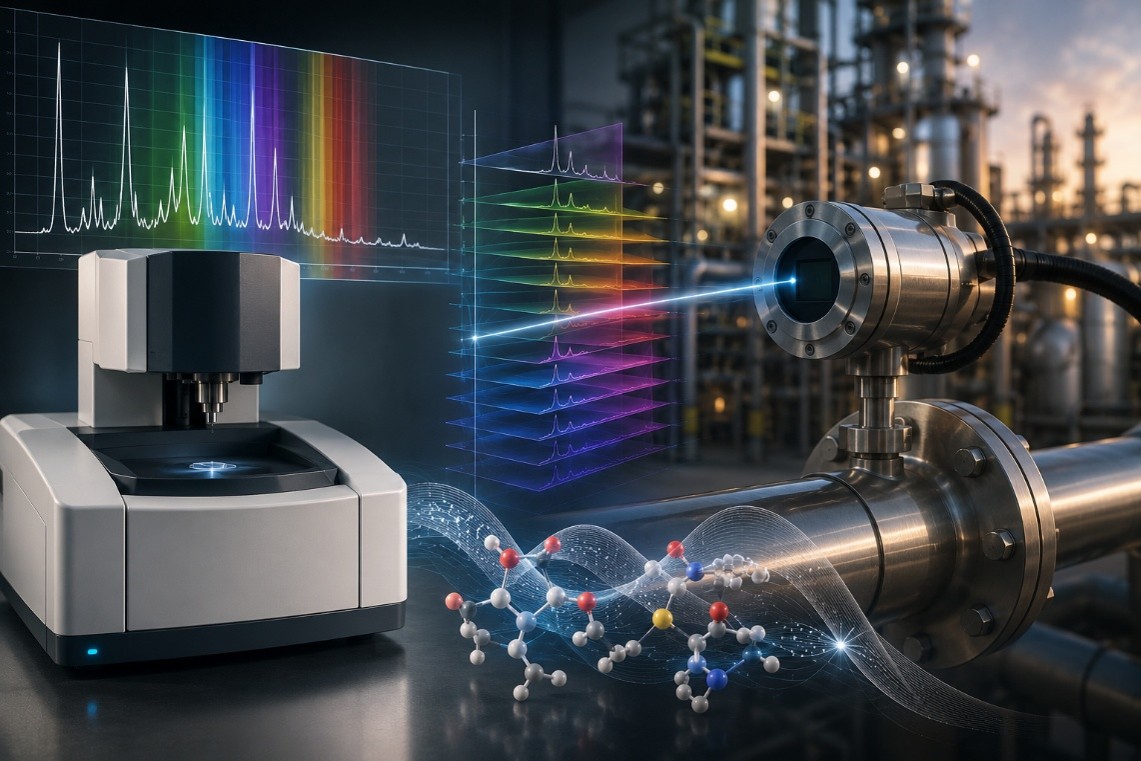
A MIR measurement engine is designed around this principle. Rather than acquiring a complete infrared spectrum and subsequently extracting relevant information from a large dataset, it focuses measurement capability on the spectral regions that demonstrate the strongest relationship with specific oil condition parameters.
The advantage of this approach is not that less information is collected, but that the measurement system is optimised around the information that matters.
The optical configuration, detector architecture, signal processing, calibration strategy, and chemometric models are all developed together for the purpose of predicting targeted lubricant parameters such as water contamination, oxidation progression, and additive degradation.
This application-specific design enables highly accurate and repeatable measurement performance for defined degradation indicators.
In practical condition monitoring applications, total measurement uncertainty is often influenced less by nominal spectral resolution and more by the complete analytical workflow: sensor stability, calibration robustness, environmental tolerance, sample presentation, and the ability to maintain consistent measurement conditions over long periods.
Performance Advantage Through Chemometric Model Optimisation
The performance advantage of MIR measurement engines should be considered specifically in the context of chemometrically derived parameters.
The comparison is not that MIR technology is universally superior to FTIR spectroscopy. Rather, a purpose-built MIR measurement system can achieve improved prediction accuracy and reduced measurement error for specific lubricant condition parameters through optimisation of the complete analytical process.
This advantage is driven by two fundamental factors.
Robustness of the complete platform
The robustness of the complete MIR measurement platform—including the measurement architecture, algorithms, regression development, calibration methodology, and analytical workflow—allows the system to be specifically engineered for continuous oil condition monitoring.
Consistency of sample delivery
The consistency of sample delivery to the MIR measurement engine reduces variability and improves model performance. By measuring lubricant directly within the operating system, the technology minimises uncertainties associated with sample extraction, transportation, storage, preparation, and changes that may occur between sampling and laboratory analysis.
It is important to recognise that FTIR itself is a measurement technology, while ASTM and DIN procedures represent reference analytical methodologies. These approaches should not be directly compared with chemometric prediction models. The appropriate comparison is therefore not between analytical techniques in general, but between the ability of different measurement approaches to accurately predict defined lubricant condition parameters.
Simplified Measurement Architecture and Robust Modelling
From a signal-processing perspective, a dedicated MIR measurement engine provides an opportunity to develop focused chemometric models based on the most relevant spectral information.
FTIR-based oil analysis frequently uses advanced multivariate techniques such as partial least squares regression to extract relationships from high-dimensional spectral datasets. These approaches are powerful and remain highly valuable where comprehensive chemical characterisation is required.
For continuous monitoring of known degradation mechanisms, however, a targeted MIR measurement approach allows the sensing architecture and prediction model to be developed together. The system is designed around the specific parameters being measured rather than adapting a general-purpose spectral measurement platform after data acquisition.
This can improve model transparency, simplify calibration management, and enhance long-term robustness in industrial environments.
Stability for Real-World Operating Conditions
Another important advantage of MIR measurement engines is their suitability for demanding industrial environments.
Continuous condition monitoring requires sensors that can operate reliably in engines, gearboxes, turbines, hydraulic systems, and other machinery where vibration, thermal cycling, contamination, and long operating periods are normal conditions.
Purpose-built MIR measurement engines use stable optical architectures designed for continuous operation. Reduced mechanical complexity and elimination of moving interferometric components can improve resistance to environmental influences and support long-term measurement consistency with minimal maintenance requirements.
For condition monitoring systems, this operational stability is often as important as the analytical capability itself.
The Importance of Real-Time Measurement
Perhaps the most significant distinction between laboratory analysis and inline monitoring is not optical—it is temporal.
Oil degradation is dynamic. Water ingress, oxidation progression, contamination events, and additive depletion develop continuously during machine operation.
Laboratory FTIR analysis provides highly valuable information, but it requires sampling, transport, preparation, and analysis before results become available. During this period, lubricant condition may continue to change, and the sample may experience variations caused by handling, storage, or environmental exposure.
MIR measurement engines address this challenge by analysing lubricant directly within the operating system and providing continuous condition information in real time.
This enables earlier detection of abnormal trends, improved understanding of degradation behaviour, and more informed maintenance decisions based on the actual operating condition of the machine.
Complementary Technologies for Different Analytical Needs
The evolution of MIR measurement engines does not diminish the importance of FTIR spectroscopy.
Laboratory FTIR remains indispensable for forensic analysis, lubricant development and root-cause investigations.
The distinction is therefore not about replacing one technology with another. It is about recognising that different analytical challenges require different measurement approaches.
FTIR excels when…
Maximum chemical information and diagnostic flexibility are required.
MIR engines excel when…
Continuous monitoring, measurement consistency, and accurate prediction of defined lubricant parameters are the primary objectives.
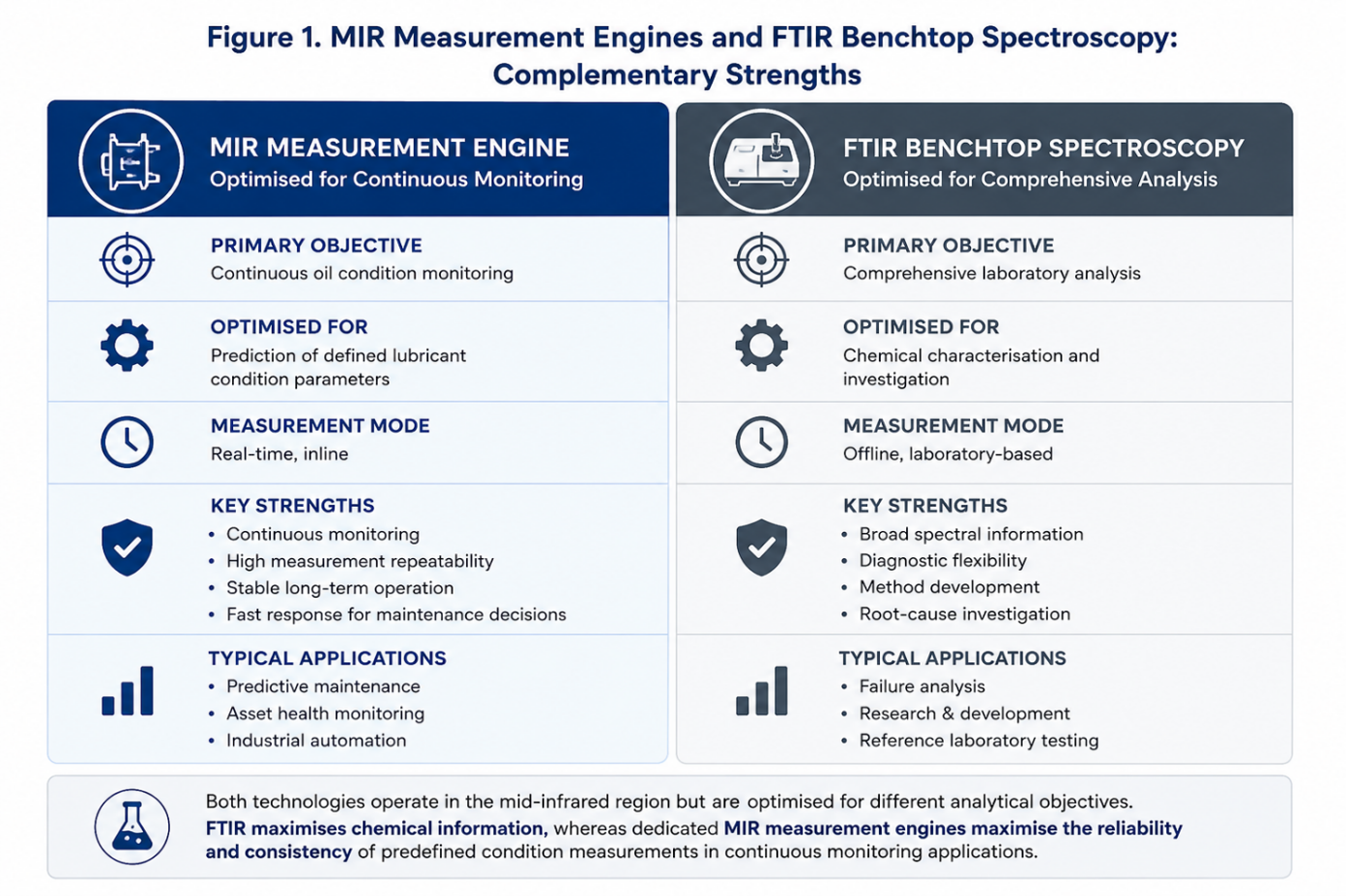
Figure 1: MIR vs FTIR strengths and applications
The Future
The future of oil condition monitoring will not be defined solely by the amount of spectral information collected, but by how effectively measurement systems deliver reliable, actionable information under real operating conditions.
Beyond spectral resolution, factors such as measurement stability, sample consistency, calibration robustness, and chemometric model performance determine the practical value of a monitoring solution.
Related Reading
- Online Sensors for Oil Analysis: Benefits, Concerns and Practical Uses
- Why Condition Monitoring Demands More Than Vibration Alone Today
- Expand Your Lubricant Condition Monitoring Program to Unlock More Benefits
- How to Extend Oil Drain Intervals Safely Using Condition Monitoring
- Exploring the Different Types of Condition Monitoring