

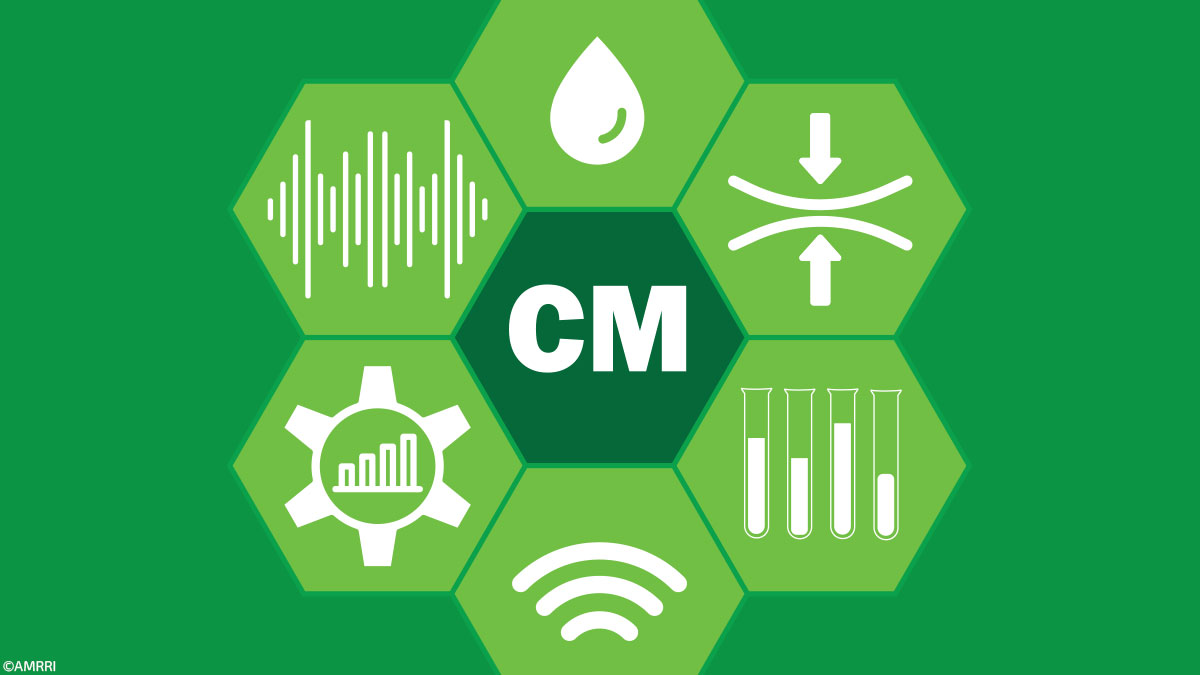
Condition monitoring is sometimes portrayed in industry messaging as being effectively limited to vibration analysis and ultrasound. Such claims, including those recently advanced by emerging vendors in the sensing technology space, reflect a broader pattern of marketing-driven simplification rather than technical accuracy. International standards define condition monitoring as a process that incorporates multiple diagnostic techniques, including lubricant analysis, vibration, thermography, and electrical methods 1.
Reliability-centered maintenance theory further emphasizes that different technologies are required to detect distinct failure modes and stages of degradation 2. Empirical research in predictive maintenance consistently demonstrates that no single method provides complete fault coverage across all mechanical systems 3. These foundational perspectives establish that condition monitoring must be understood as an integrated, multi-technology framework rather than a simplified binary construct.
Condition monitoring must be understood as an integrated, multi-technology framework rather than a simplified binary construct.
Oil analysis is a critical component of this framework because it can detect early-stage degradation and identify the root causes of failure. Oil analysis is formally recognized as a primary condition monitoring method capable of evaluating lubricant condition, contamination, and wear debris as indicators of machine health 1. Standardized testing methods developed by ASTM provide consistent procedures for assessing these parameters across a wide range of equipment types 7.
In particular, tribological research demonstrates that wear particle generation occurs at the onset of failure mechanisms, often preceding measurable changes in vibration signatures 4. Furthermore, applied studies in machinery diagnostics show that oil analysis frequently identifies incipient faults earlier than vibration-based methods in rotating equipment systems 6. Accordingly, this article directly challenges reductionist claims by demonstrating that condition monitoring is inherently multi-modal and that oil analysis plays a critical, often leading role in fault detection and diagnosis.
Condition Monitoring as a Multi-Technology Framework
Standards and Established Practice
Condition monitoring is fundamentally structured as a multi-technology discipline designed to capture different dimensions of machine degradation. ISO 17359 explicitly identifies lubricant analysis as a primary condition-monitoring technique, alongside vibration and other diagnostic methods 1. Furthermore, reliability-centered maintenance frameworks reinforce that the selection of monitoring technologies must align with specific failure mechanisms rather than convenience or convention 2.
In addition, industry research demonstrates that combining multiple technologies significantly improves fault detection accuracy and reduces the risk of missed failures 3. Taken together, these perspectives confirm that any attempt to reduce condition monitoring to a limited subset of technologies is inconsistent with established practice.
Any attempt to reduce condition monitoring to a limited subset of technologies is inconsistent with established practice.
This broader context underscores the need to examine how different technologies contribute uniquely to fault detection.
Failure Mechanism Complexity
The necessity of multiple technologies becomes more evident when considering the complexity of failure mechanisms in rotating equipment. Mechanical systems experience degradation through processes such as wear, fatigue, corrosion, and contamination 8. Notably, each process produces distinct physical and chemical signatures that are not uniformly detectable by a single monitoring method 5.
Moreover, empirical studies have shown that certain faults remain undetected when relying exclusively on vibration or acoustic methods 9. Consequently, this complexity reinforces—not merely suggests—the need for oil analysis within a comprehensive monitoring strategy.
Oil Analysis as a Foundational Diagnostic Method
Lubricant Condition and Wear Assessment
Oil analysis serves as a foundational diagnostic method by providing direct insight into both lubricant condition and machine wear. Standard practices defined by ASTM establish oil analysis as a structured approach for monitoring viscosity, oxidation, contamination, and wear metals 7. In particular, tribological research confirms that lubricants act as carriers of wear debris and contaminants, effectively transporting evidence of internal machine conditions 4.
Additionally, engineering studies demonstrate that oil analysis enables simultaneous evaluation of mechanical and chemical degradation processes 5. As a result, this dual capability distinguishes oil analysis from external sensing methods that rely solely on energy measurement. This distinction becomes particularly important when precise diagnostic resolution is required for effective maintenance decisions.
Characterizing Wear Mechanisms
The diagnostic depth of oil analysis is further enhanced by its ability to characterize wear mechanisms. Analytical ferrography and particle analysis techniques allow for the identification of wear modes such as abrasion, adhesion, and fatigue 9. Likewise, elemental spectroscopy provides additional resolution by linking detected metals to specific machine components 6.
Together, these capabilities enable practitioners to move beyond fault detection and toward precise failure diagnosis. Consequently, this level of diagnostic resolution establishes oil analysis as a critical tool for understanding the underlying causes of machine degradation.
Early Fault Detection and the Failure Progression Curve
Detection at the Point of Origin
Oil analysis enables earlier fault detection by identifying degradation at the point of origin within the machine. Wear particles are generated during the initial stages of material interaction, often before significant energy is produced 4.
In fact, empirical studies have shown that wear debris analysis can detect bearing and gear faults months in advance of vibration-based detection thresholds 6. In applied industrial settings, advanced lubricant data analysis has demonstrated the potential to extend this detection window significantly, in some cases approaching multiple years of advanced indication.
Wear debris analysis can detect bearing and gear faults months in advance of vibration-based detection thresholds.
Furthermore, additional research indicates that early-stage contamination and lubricant degradation can be identified before they result in measurable mechanical symptoms 5. As a result, these findings demonstrate that oil analysis operates at the earliest portion of the failure progression curve. This early positioning is best understood within the context of reliability engineering models.
The P–F Interval Advantage
The temporal advantage of oil analysis is best understood within the context of the P–F interval. Reliability literature defines the P–F interval as the time between detectable potential failure and functional failure 2. Importantly, technologies that detect faults earlier within this interval provide a greater opportunity for corrective action and risk mitigation 3.
In contrast, comparative studies have shown that vibration analysis often detects faults at later stages when damage has progressed sufficiently to affect machine dynamics 9. Therefore, this positioning highlights the strategic value of oil analysis in extending the predictive maintenance window.
Root Cause Identification and Diagnostic Resolution
Particle Morphology and Elemental Analysis
Oil analysis provides diagnostic resolution that enables the identification of root causes of failure. Wear particle morphology allows analysts to distinguish between different wear mechanisms based on particle size, shape, and texture 4. Elemental analysis further supports root cause identification by associating specific metals with machine components 6.
Contamination analysis reveals external influences such as dirt ingress or water contamination that contribute to accelerated wear 5. These capabilities allow oil analysis to move beyond symptom detection and toward causal diagnosis. This ability to identify underlying causes has direct implications for maintenance effectiveness.
From Symptoms to Causes
The ability to identify root causes has significant implications for maintenance strategy. Corrective actions based on root cause analysis are more effective than those based solely on symptom detection 3. Studies in reliability engineering have demonstrated that addressing underlying causes reduces recurrence rates and improves equipment lifespan 2.
Corrective actions based on root cause analysis are more effective than those based solely on symptom detection.
In contrast, technologies that primarily detect symptoms may require additional analysis to determine the source of failure 9. This distinction reinforces the importance of oil analysis within a comprehensive diagnostic framework.
Internal Access Versus External Measurement
The Lubricant as a Diagnostic Medium
Oil analysis provides direct access to the internal operating environment of machinery. Lubricants circulate through critical components, collecting information about wear, contamination, and chemical changes 5. As such, tribological studies confirm that this internal perspective allows for the detection of conditions that are not immediately observable through external measurement 8.
Moreover, wear debris transported in the lubricant reflects real-time interactions occurring at the surface level of machine components 4. Consequently, this internal visibility provides a unique diagnostic advantage. This advantage becomes more apparent when contrasted with external sensing approaches.
Limitations of External Sensing
External sensing technologies, including vibration and ultrasound, rely on detecting energy transmitted through machine structures. By comparison, these methods require faults to reach a severity level that produces measurable signals 9. Additionally, signal interpretation can be influenced by factors such as machine geometry and operating conditions 3.
As a result, certain early-stage faults may remain undetected until they progress further. This contrast highlights the complementary nature of internal and external monitoring approaches, particularly when evaluating the limitations of any single diagnostic method.
Limitations of Vibration and Ultrasound as Exclusive Solutions
Detection Gaps in Single-Technology Approaches
Vibration and ultrasound are valuable diagnostic tools, but are limited when used as standalone solutions. Vibration analysis is highly effective for detecting imbalance, misalignment, and looseness, but is less sensitive to early-stage wear in low-energy conditions 3. Ultrasound can detect friction-related phenomena but provides limited information regarding wear mechanisms and contamination sources 9.
Research has shown that reliance on a single technology increases the likelihood of missed or delayed fault detection 2. These limitations underscore the need for a multi-technology approach. This recognition leads directly to the importance of integrating complementary diagnostic methods.
Closing the Gap with Oil Analysis
The integration of oil analysis addresses many of these limitations by providing complementary data. Oil analysis captures early-stage degradation and identifies root causes, while vibration and ultrasound provide information about fault severity and dynamic behavior 5.
Studies in predictive maintenance demonstrate that combining these methods improves diagnostic accuracy and maintenance decision-making 3. This integrated approach aligns with best practices in reliability engineering and forms the basis for modern condition monitoring strategies.
Integration of Technologies in Modern Reliability Practice
Complementary Diagnostics as Core Principle
Modern reliability practice formalizes the integration of multiple condition monitoring technologies as a core operational principle. Reliability-centered maintenance frameworks advocate for the use of complementary diagnostic tools to address different failure modes 2. Industry research demonstrates that integrated monitoring programs achieve higher reliability and lower maintenance costs than single-technology approaches 3.
Tribological and mechanical studies confirm that combining internal and external monitoring methods provides a more complete understanding of machine condition 8. These findings support a holistic approach to condition monitoring. This holistic approach is essential for maximizing diagnostic effectiveness.
Building a Comprehensive Diagnostic System
The integration of oil analysis with vibration and ultrasound creates a comprehensive diagnostic system. Oil analysis provides early detection and root cause identification, while vibration and ultrasound assess fault progression and severity 5. This combination enables more informed maintenance decisions and reduces the risk of unexpected failures 9.
Integrated monitoring programs achieve higher reliability and lower maintenance costs than single-technology approaches.
The resulting synergy enhances both detection capability and diagnostic accuracy. This integrated perspective provides the foundation for evaluating reductionist claims.
Conclusion
The assertion that condition monitoring has been reduced to vibration analysis and ultrasound is inconsistent with established standards, empirical research, and practical application. Oil analysis is recognized as a primary condition-monitoring technology in international standards and provides unique capabilities for early fault detection and root-cause identification 1. Furthermore, tribological and engineering research demonstrates that oil analysis detects degradation at its origin and offers diagnostic insights not available through external sensing methods 4,5.
In addition, reliability frameworks confirm that effective condition monitoring requires integrating multiple technologies rather than relying on a single approach 2. Therefore, a more accurate and defensible position is that condition monitoring is a multi-technology discipline in which oil analysis plays a critical and often leading role in identifying and diagnosing machine failure.
To suggest otherwise is misleading and reflects a reductionist narrative that prioritizes market positioning over technical accuracy.
Growth strategies that narrow the scope of condition monitoring do not improve reliability; rather, they dilute it.
As industry leaders, we have a responsibility to represent these technologies accurately and with integrity, ensuring that end users are equipped with the full range of tools necessary to detect, diagnose, and prevent failure. Ultimately, anything less is a disservice to the profession and the organizations that depend on it.
References
- ISO. (2018). ISO 17359: Condition monitoring and diagnostics of machines—General guidelines.
- Moubray, J. (1997). Reliability-Centered Maintenance.
- Bloch, H. P., & Geitner, F. K. (2014). Machinery Failure Analysis and Troubleshooting.
- Stachowiak, G. W., & Batchelor, A. W. (2014). Engineering Tribology.
- Totten, G. E. (2006). Handbook of Lubrication and Tribology.
- Macian, V., et al. (2003). Wear, 255, 1297–1305.
- ASTM International. (2020). Standards for used oil analysis and condition monitoring.
- Hutchings, I. M., & Shipway, P. (2017). Tribology: Friction and Wear of Engineering Materials.
- Anderson, D. (2012). Oil Analysis Solutions.