

By Bob Kendall
When most people think about lubrication reliability, they picture what happens inside the machine.
Bearings. Hydraulic systems. Gears. Pumps. Injectors. Oil analysis reports.
But in reality, many lubrication failures begin long before the lubricant ever reaches the equipment.
They begin in storage rooms.
They begin with moisture intrusion, dirty transfer containers, neglected breathers, poor handling practices, unfiltered oil, and the dangerous assumption that “new oil” automatically means “clean oil.”
That assumption alone costs industry billions of dollars every year.
Over the years working around industrial lubrication programs, marine operations, mobile equipment, hydraulic systems, and manufacturing facilities throughout the Pacific Northwest, I’ve consistently seen the same pattern:
Facilities spend enormous amounts of money repairing failures while unknowingly introducing contamination into their systems every single day.
And contamination is patient.
It rarely destroys equipment overnight. Instead, it shortens component life slowly and consistently, one particle at a time, until downtime becomes accepted as normal operating behavior.
The Reliability Threat Most Facilities Never See
One of the biggest misconceptions in lubrication is the idea that if oil looks clean, it probably is clean.
Machines strongly disagree.
Modern hydraulic and lubrication systems operate with extremely tight tolerances. Many of the particles capable of damaging pumps, servo valves, bearings, injectors, and hydraulic components are completely invisible to the human eye.
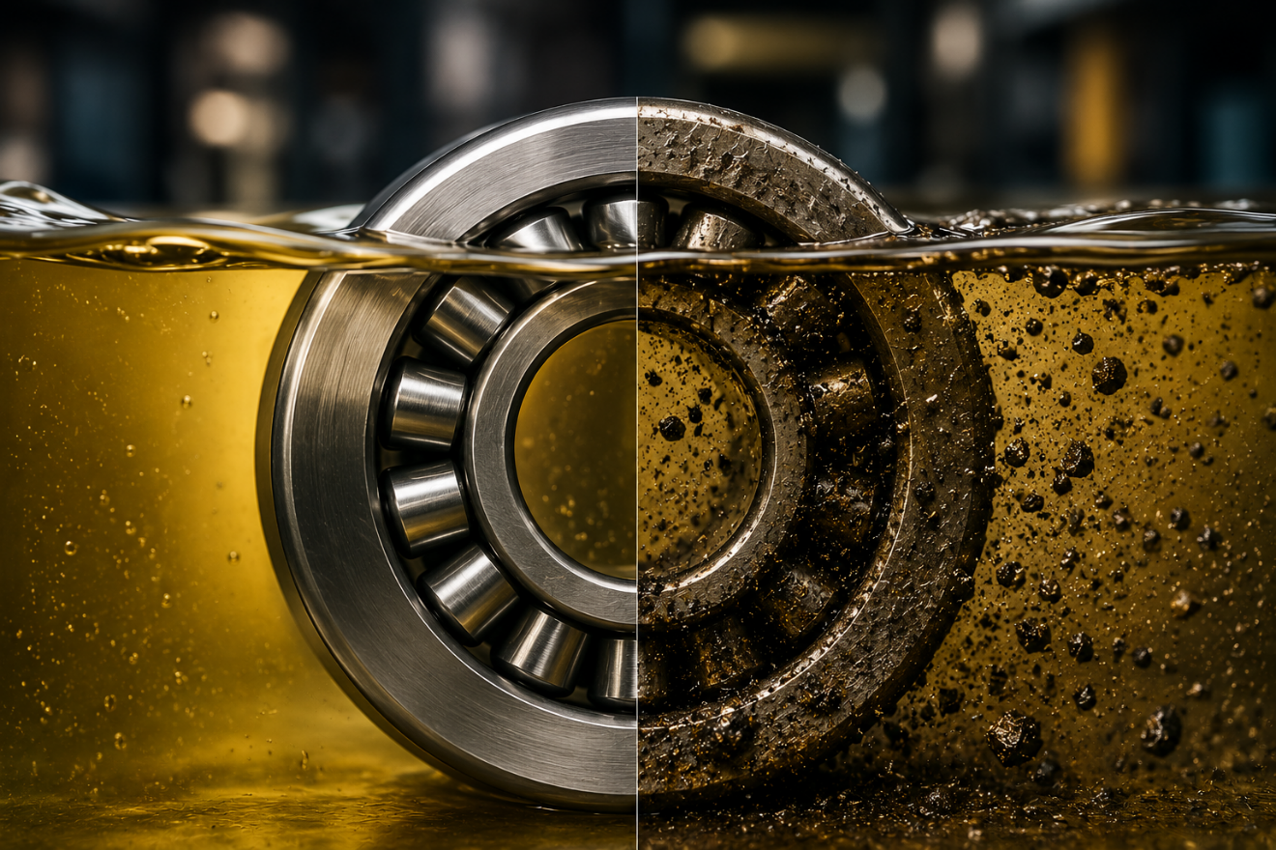
A lubricant often appears perfectly clean while still carrying contamination levels high enough to accelerate internal wear significantly.
And that problem continues growing as manufacturers push higher operating pressures, tighter clearances, lower emissions requirements, and increasingly sensitive fuel and hydraulic systems.
Particle contamination remains one of the leading causes of lubrication and hydraulic system failures across industrial equipment today.
The challenge is that contamination rarely enters through one catastrophic event.
It enters through dozens of small ones:
- Dirty storage practices
- Open drum tops
- Condensation
- Poor transfer methods
- Damaged seals
- Missing desiccant breathers
- Unfiltered new oil
- Cross-contamination between lubricants
- Leaks pulling contamination into the system
Individually, these issues are often dismissed as minor.
Collectively, they destroy reliability.
New Oil Does Not Mean Clean Oil
This remains one of the hardest conversations to have outside the lubrication community.
Many people assume lubricant cleanliness is guaranteed once it leaves the supplier.
Unfortunately, that is not how the real world works.
Oil accumulates contamination throughout the entire supply chain: blending, transportation, storage, handling, dispensing, and transfer.
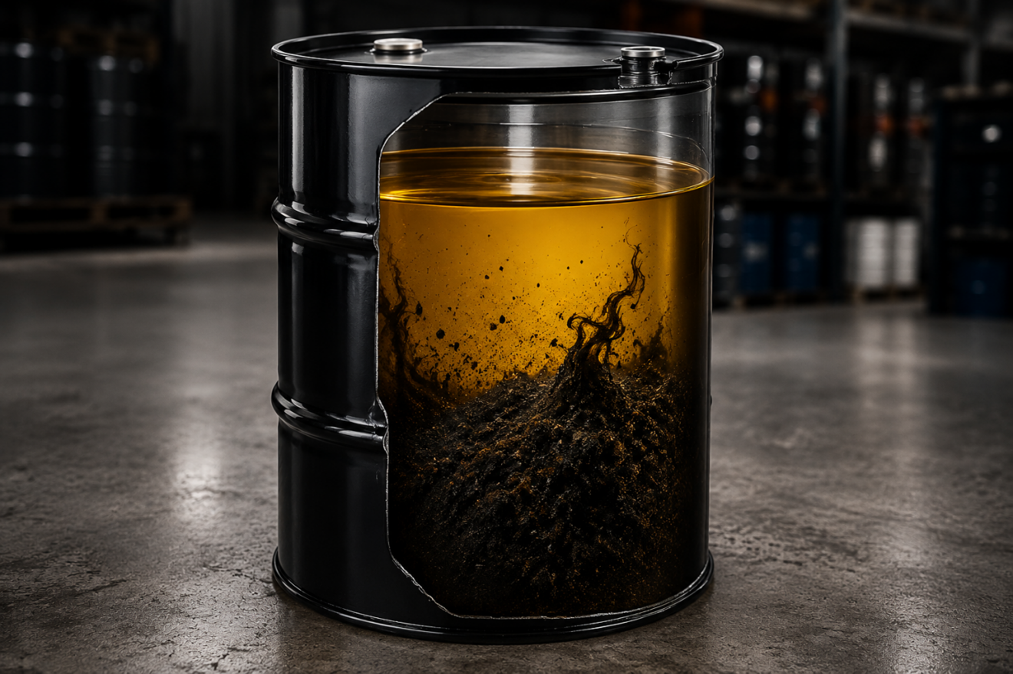
By the time lubricant finally reaches the equipment, it often already exceeds acceptable cleanliness targets for critical systems.
That is why world-class lubrication programs do not simply add oil.
They actively manage lubricant cleanliness from delivery all the way to application.
Over the years, I’ve had the opportunity to work alongside Chris Nation, STLE CLS, OMA I, ICML MLT I, General Manager of Guardian Reliability Services, seeing firsthand how contamination control and precision lubrication programs directly improve operational efficiency, reduce maintenance costs, extend equipment life, and increase uptime.
The results are measurable.
- Longer oil life
- Reduced component wear
- Fewer emergency failures
- Cleaner systems
- Lower maintenance costs
- More uptime
In today’s environment of volatile lubricant pricing, tighter budgets, and increasing pressure on maintenance departments, reliability practices are no longer optional operational improvements.
They are financial protection strategies.
Some of the highest ROI improvements I’ve personally seen are also some of the simplest:
- Sealed transfer containers
- Dedicated filtration systems
- Proper desiccant breathers
- Cleaner lube rooms
- Contamination control procedures
- Consistent oil analysis and condition monitoring
None of those improvements are flashy.
But they work.
As Chris Nation explained:
“One of the most rewarding parts of reliability services is helping customers achieve measurable cost savings during turbulent market conditions. We’re not just protecting oil as an asset, we’re helping protect the physical equipment and operational uptime that businesses depend on every day.”
— Chris Nation, General Manager, Guardian Reliability Services
That perspective changes the entire conversation around lubrication.
Because once lubricants are viewed as active machine components instead of consumable products, priorities begin changing very quickly.
Suddenly: moisture control matters, filtration matters, breathers matter, transfer procedures matter, storage conditions matter, and contamination prevention becomes part of protecting the business itself.
Reliability Is Built in the Lube Room
The lubrication room is often treated like a storage closet.
In reality, it is a reliability control center.
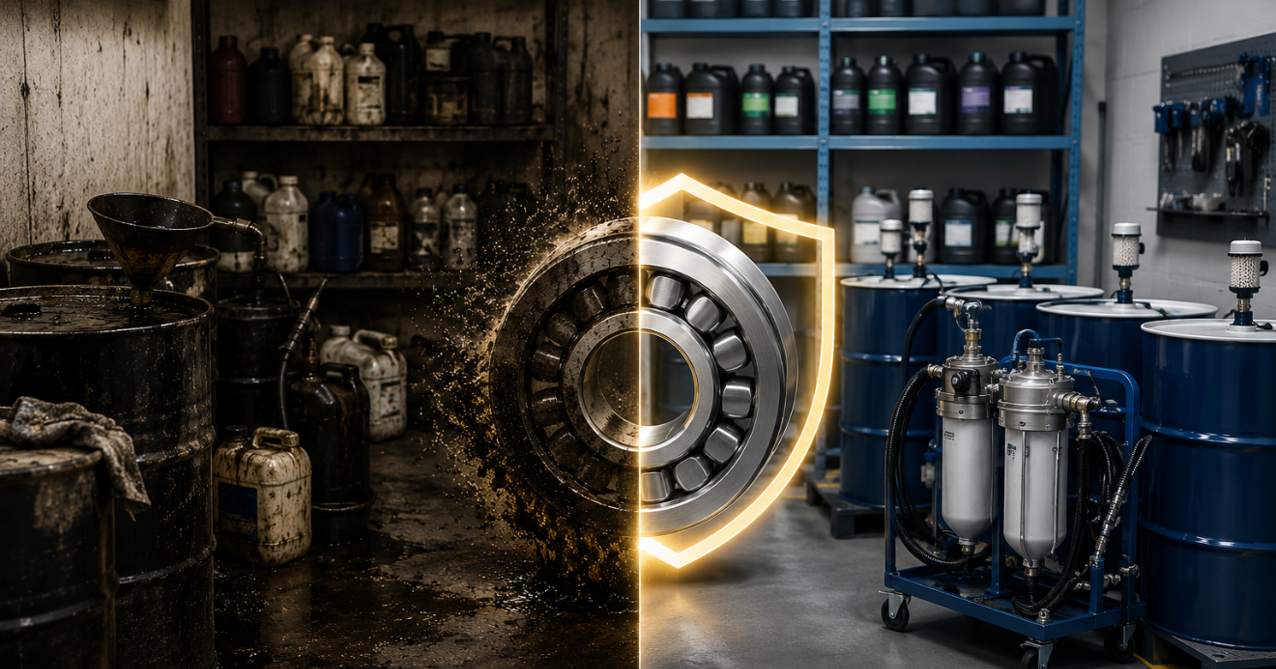
The best operations I’ve seen all share a similar mindset:
They understand lubricants are not simply consumables. They are active components within the machine.
A contaminated lubricant cannot properly separate surfaces, transfer heat, maintain hydraulic efficiency, or protect critical components from wear.
Once facilities truly understand that, the details stop looking small.
Because the cost of failure is never small.
The Hidden Cost of “Normal”
One of the most dangerous things in maintenance culture is normalization.
A leaking hydraulic hose becomes normal.
Frequent filter plugging becomes normal.
Repeated injector failures become normal.
Dirty reservoirs become normal.
Until eventually nobody asks why those conditions are being accepted in the first place.
The financial consequences can be enormous.
Elimination of equipment breakdowns through functional predictive maintenance programs
Reduction in maintenance costs, according to independent surveys cited by the U.S. Department of Energy
According to the U.S. Department of Energy’s Operations & Maintenance Best Practices Guide, independent surveys indicate that functional predictive maintenance programs can reduce maintenance costs by 25–30% and eliminate 70–75% of equipment breakdowns.
Yet contamination-related problems are still ignored every day because they develop gradually rather than catastrophically.
That is what makes contamination so dangerous.
It rarely announces itself loudly in the beginning.
It quietly shortens equipment life until a major failure finally occurs, and by then the blame usually falls on the component instead of the conditions surrounding it.
Simplicity Still Wins
The lubrication industry has no shortage of technology, sensors, software platforms, diagnostics, and monitoring systems.
Many of those tools provide tremendous value.
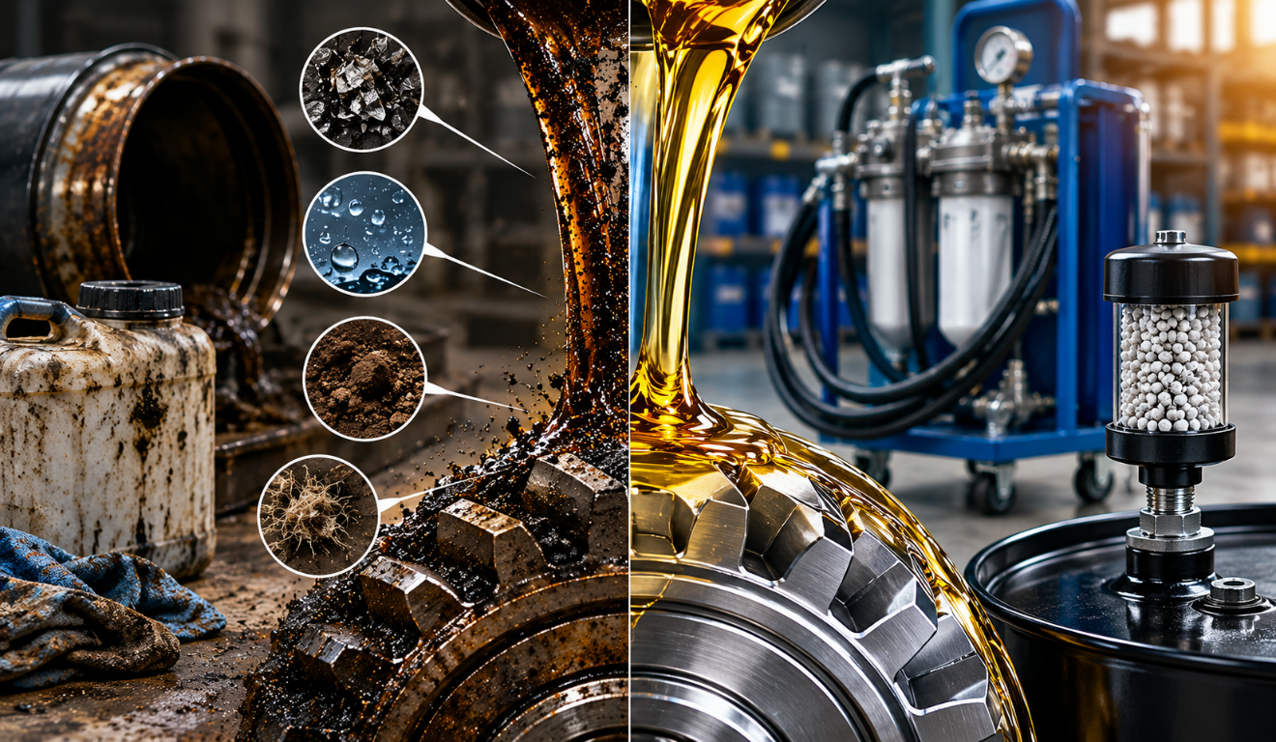
But some of the most effective reliability improvements remain remarkably simple:
- Keep lubricants clean
- Keep lubricants dry
- Use the correct product
- Store it properly
- Deliver it properly
- Filter it properly
- Monitor it consistently
- Eliminate contamination pathways whenever possible
None of that advice is revolutionary.
But consistently applying those fundamentals is what separates reliability-focused organizations from reactive maintenance cultures.
Final Thoughts
Machines continue becoming more advanced every year.
But even the most sophisticated equipment in the world will not survive poor lubrication practices indefinitely.
In many facilities, reliability begins long before startup.
It begins with the systems, habits, standards, and culture surrounding lubricant storage, handling, filtration, contamination control, and maintenance discipline.
Because most lubrication failures are not sudden events.
They are slow-moving problems introduced long before the machine ever had a chance to defend itself.
Related Reading
- The Clean Oil Imperative: Why You Can’t Afford Dirty Lubricants
- The Economics of Clean Oil: Why Prevention Beats Repair Every Time
- 25 Conversation Starters When Your Lube Room Looks Like a Crime Scene
- The Truth About Outdoor Lubricant Storage and Its Impacts on Oil Integrity
- Top 4 Elements to Consider for Your Lubrication Program
About the Author
Bob Kendall is a New Business Development Manager with Wilcox & Flegel, specializing in commercial fuel, lubricant, and reliability solutions throughout the Pacific Northwest. With a background spanning fuel distribution, industrial lubricants, fleet operations, marine fueling, and business development, Bob works closely with customers to reduce operating costs, improve equipment reliability, and strengthen supply chain performance.
He has experience supporting customers across the marine, construction, transportation, forestry, manufacturing, and government sectors, helping organizations optimize fuel programs, implement lubrication best practices, improve contamination control, and identify operational efficiencies. Bob is particularly passionate about building long-term partnerships and bringing practical, real-world solutions that create measurable value for his customers.
Bob regularly shares insights on fuel markets, renewable diesel, lubrication reliability, condition monitoring, and business development, while staying actively engaged with the maritime and industrial communities throughout Washington and Oregon.