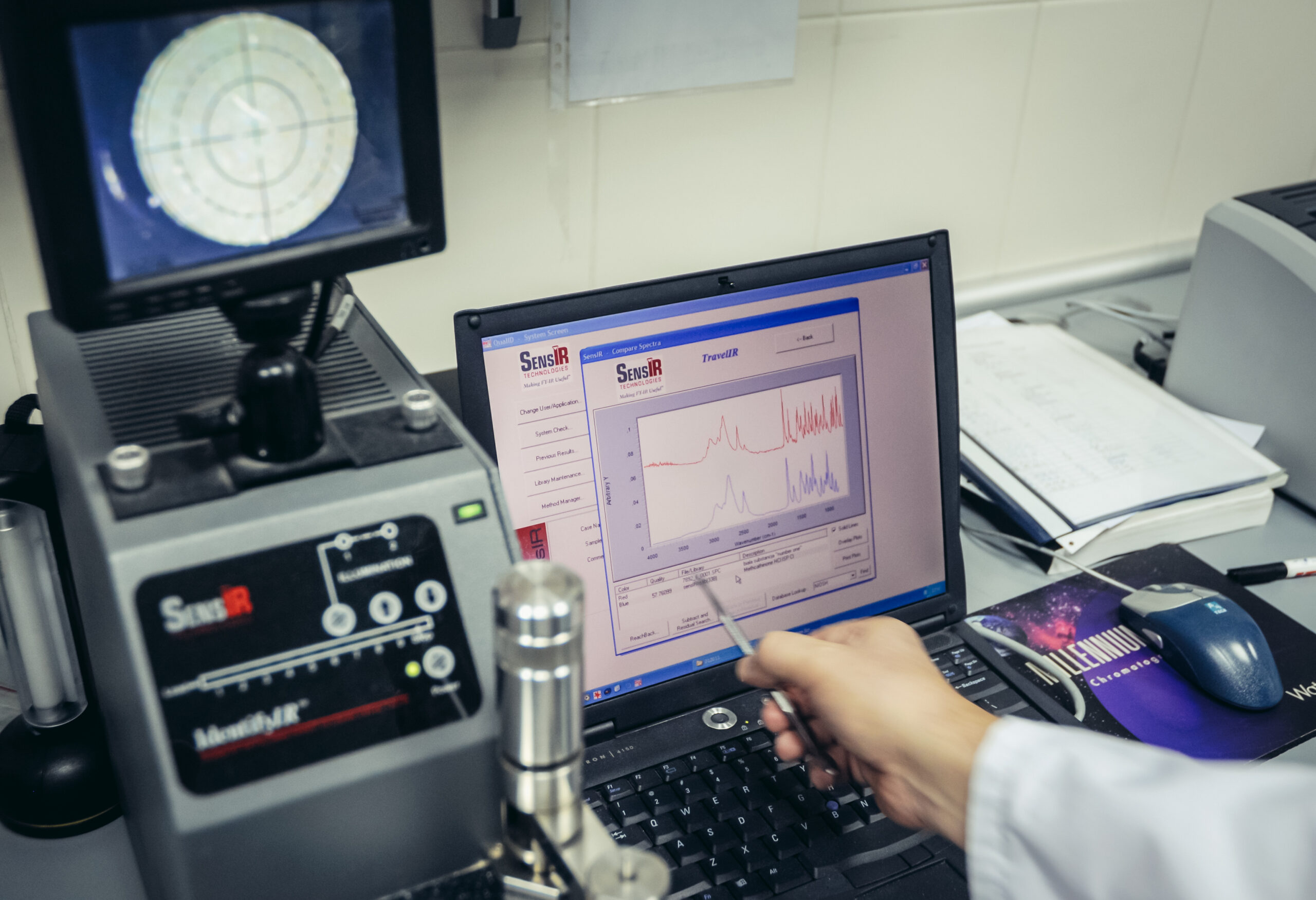


Condition monitoring is sometimes portrayed in industry messaging as being effectively limited to vibration analysis and ultrasound. Such claims, including those recently advanced by emerging vendors in the sensing technology space, reflect a broader pattern of...
Condition Monitoring
How AI and Risk Profiles Are Transforming Onsite Oil Analysis Programs
Several years ago, I published an article titled, “How to Get Started with Onsite Oil Analysis: A Step-by-Step Guide”. In that article, I outline 7 steps to developing a successful onsite program: Developing an equipment criticality profile Determining sampling...
Lubricant Additive Depletion as an Early Asset Health Signal
Oils are composed of base oils and additives. Typically, additives are sacrificial; they deplete first before the base oil is affected. As such, by trending their quantities over time, we can gain insight into a few of the conditions to which the oil is subjected. By...
How EGR Failures Destroy Engines – and How Oil Analysis Detects Them
The EGR (Exhaust Gas Recirculation) system recirculates a fraction of the exhaust gases into the intake manifold to lower combustion temperature, reduce NOx emissions, and, in some cases, improve fuel consumption in both diesel and gasoline engines. This recirculation...
Root Causes of Electrostatic Spark Discharge in Modern Lubrication Systems
Understanding Electrostatic Spark Discharge and Its Impact on Lubrication Systems Electrostatic Spark Discharge typically occurs when static is built up in an oil at a molecular level, causing it to discharge in the system and create free radicals, which increase the...
How Acid Number and Base Number Reveal the True Health of Diesel Oils
Lubrication analysis plays a vital role in predictive and preventive maintenance for diesel engines. Among the most informative tests available are Acid Number (AN) and Base Number (BN), two complementary measurements that provide insight into oil health, additive...
How to Extend Oil Drain Intervals Safely Using Condition Monitoring
What is Condition Monitoring and Why Is It Important? In this age of artificial Intelligence and sensors that pop on and off, we often forget about the basics and where things all started. Condition monitoring began as a way to detect anomalies in our equipment using...
How to Apply the Pareto Principle to Oil Analysis for Smarter Maintenance Gains
In industrial maintenance and reliability engineering, few concepts are as intuitively powerful as the Pareto Principle—also known as the 80/20 rule. Originating from Vilfredo Pareto's observations of wealth distribution, this principle has evolved into a universal...
Turn Maintenance into a Profit Center with an EBITDA Mindset
For over 35 years, I have been at the heart of reliability, lubrication, and operational excellence. In my experience, siloed decision-making between maintenance, HSE, and procurement often results in inefficiencies, increased risks, and missed opportunities for...
How Machine Learning is Redefining Fluid Analysis for Predictive Maintenance
Traditional fluid analysis relies on pre-set flagging limits to evaluate the severity of a sample. These limits, refined over time through statistical analysis, provide a baseline for assessing whether test results indicate any maintenance needs. If a sample falls...