


Oils are composed of base oils and additives. Typically, additives are sacrificial; they deplete first before the base oil is affected. As such, by trending their quantities over time, we can gain insight into a few of the conditions to which the oil is subjected.
By interpreting these conditions and patterns, we can correlate them with the health of the asset and plan accordingly for possible repairs or maintenance. In this article, we will do a deeper dive into ways these can be explored to add value to your asset management program.
Why Do Additives Matter?
Additives come in various ratios and chemical compositions, but when we talk about additives in oils, they really have three main functions. They can either;
- Enhance the properties of the base oil, which already exist
- Suppress the undesirable base oil properties or
- Impart new properties to the base oil
On their own, they cannot affect anything, but when coupled with a base oil, they can impact an asset. Base oils also have specific properties, which, when combined with additives, allow assets to perform at their best.
The real performance comes from how the additives and base oil work together.
As shown in Figure 1, some additives that enhance properties include antioxidants, corrosion inhibitors, anti-foam agents, and demulsifying agents. Those responsible for suppressing undesirable properties can include pour-point depressants and viscosity improvers.
Finally, those responsible for imparting new properties include extreme-pressure additives, detergents, metal deactivators, and tackiness agents.
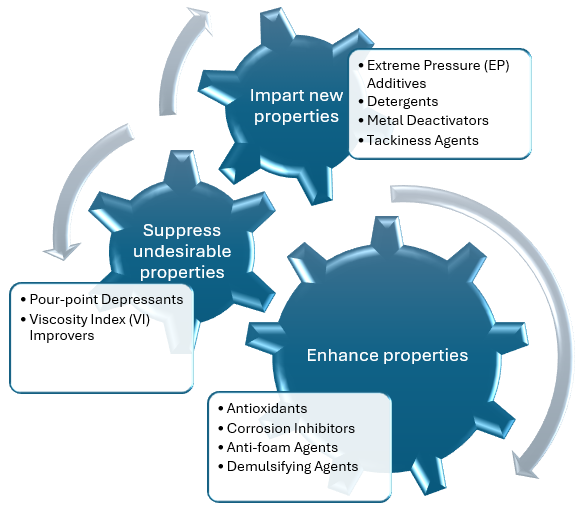
Figure 1: Functions of additives and examples
Here are some quick descriptions for a few of these additives, which will help you to gain an appreciation of their functions:
Antioxidants: these protect the oil from oxidation. They are very common in Turbine oils but can be found in many other oils. They are the first line of defense when oxidation begins and react with free radicals to neutralize them before they attack the base oil.
Corrosion inhibitors: adsorb onto the metal surfaces to help protect them. Comprised of sodium sulphonates, alkylbenzene sulphonates, or alkylphosphoric acid partial esters.
Anti-foam agents: reduce surface tension to break up foam formation. Typically, these are silicon-based, although silicone-free defoamers also exist.
Demulsifying agents: enable water and oil to separate. These were formerly composed of barium and calcium, but modern formulations use special polyethylene glycols.
Pour point depressant: alters oil crystallization, allowing the oil to form fewer crystals at lower temperatures.
Viscosity improvers: specifically designed to ensure that the viscosity of the lubricant can be more tolerant of changes in temperature and shear.
Extreme pressure additives: used under high stress to prevent the welding of moving parts. Usually comprised of a phosphorus compound.
Antiwear additives: designed to reduce wear under moderate stress. The most famous sulphur-phosphorus compound is ZDDP (Zinc Dialkyl dithiophosphate).
Detergents: keep oil soluble combustion products in suspension (especially for engine oils) and ensure they do not agglomerate. These usually contain metal additives such as Calcium and Magnesium.
Understanding the function and composition of these additives can help us to determine how they are performing in the oil. Since many of these are sacrificial, their values will decrease over time. As such, it is important to trend these values to determine whether they are remaining constant, increasing, decreasing, or decreasing at an accelerated rate.
How Can Additives Deplete?
Additives can be depleted through different mechanisms. Some of these include:
- Regular consumption through normal functioning of the lubricant
- Antioxidant depletion during oxidation
- Antiwear depletion due to high wear on the inside of the equipment
- Additive depletion via a contaminant to produce a bleaching effect
As mentioned earlier, additives are sacrificial in nature. It is very normal to see additives deplete over time; if they are not depleting and increasing, this may be a cause for concern. This can mean that someone is topping up the oil frequently or perhaps topping up with an incorrect lubricant.
Since there are numerous oils on the market, the best way to monitor the depletion of your additives is to compare them against a new sample of that oil and use that as your baseline. Your lab will help you confirm when the additive limits are approaching the danger zones.
During oxidation, a free radical is formed under conditions such as heat, wear, metal catalysts, oxygen, or water. These free radicals are unstable, and antioxidants usually neutralize them.
In the process, antioxidant levels decrease. However, if the conditions still permit oxidation, more free radicals will be formed. This means that more antioxidants will be depleted as they neutralize the free radicals until they diminish and can no longer protect the base oil. This is when the free radicals begin to attack the base oil, and varnish can form.
Once the antioxidants are gone, the oil stops defending – and starts degrading.
If there are causes of high wear, such as the incorrect viscosity of the lubricant (too thin) or the machine finishing of the inner parts of a component not being done to the required standard, this can affect the levels of antiwear in the oil. Antiwear additives protect the metal surfaces inside the equipment. However, these are only activated when moderate stress exists within the equipment.
Typically, in these situations, the antiwear additive adheres to the metal surface and helps protect it by forming a layer. Once this layer is formed, the antiwear additive has officially left the oil, and this will be reflected in a decrease in its value in the oil analysis report.
The layer will not remain forever, and due to wear on the equipment, it can be worn off and replaced by a new layer, leading to further depletion of the antiwear additives until there are no more to form another layer or protect the metal surface.
Contamination can also cause some additives to become depleted. Contaminants can react with additives, causing them to form deposits that leave the oil. Therefore, their presence will not be detected by oil analysis.
Some common contaminants are water, fuel, coolant, and acids. These contaminants can also promote the formation of catalysts for degradation mechanisms such as oxidation. Dirt and solid particles can also promote additive depletion, especially when they act as catalysts.
What Tools Can Be Used to Monitor Additive Depletion?
There are some basic analytical tools that can be used to measure the quantity of additives in oils. The spectroscopy methods are the FTIR (Fourier Transform Infrared) and ICP (Inductively Coupled Plasma). Another method is the RULER® test exclusively designed for antioxidants.
With FTIR and ICP methods, users obtain quantitative values for the elements present in the tested oil sample. These are usually reported in ppm and trended over time. Figure 2 shows an extract from a Turbine Sample report from Eurofins lab, where the levels of additives (and contaminants) are shown. When trending this, analysts should pay attention to the rate at which these additives decrease and whether an increase or decrease is noticed.
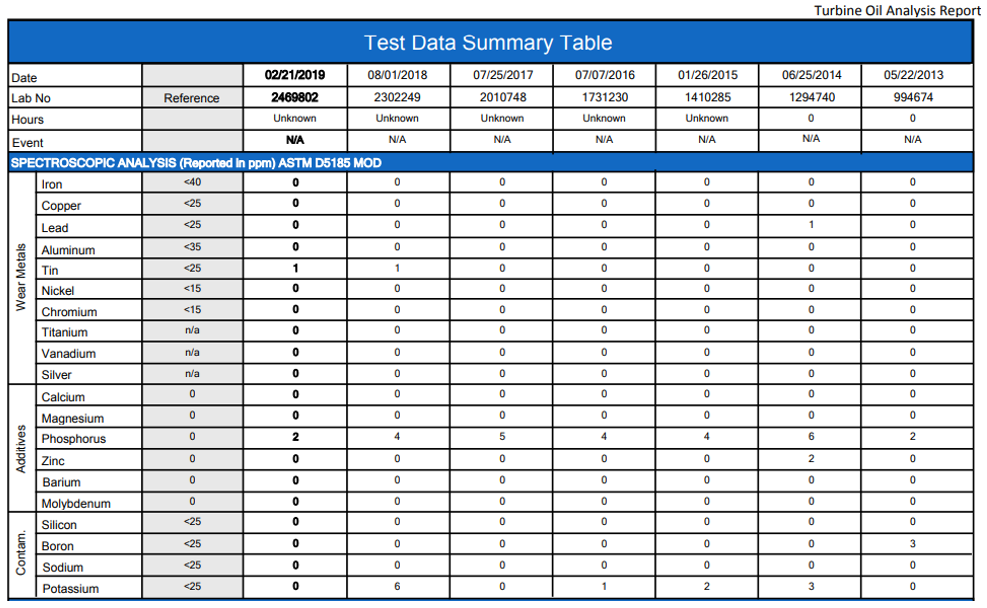
Figure 2: Sample of Eurofins Turbine Oil Analysis Report showing the levels of additives
Another tool that can be used is the RULER® (Remaining Useful Life Evaluation Routine) test, which specifically quantifies the levels of antioxidants remaining in the oil. It trends the values, compares them against the baseline for that oil, and then determines the change as a percentage.
If the RULER value falls below 25%, the antioxidant levels have reached a critical level, and one may consider replacing the oil.
Figure 3 shows a RULER graph, which identifies the presence of different types of antioxidants (Amines) and antiwear additives (ZDDP), as well as oxidation products (Fluitec, 2022).
This is a comprehensive readout of the quantities of these additive types at the time of sampling. It is easy to get a quick snapshot of its trend over time and determine whether it is declining rapidly or reaching critical levels.
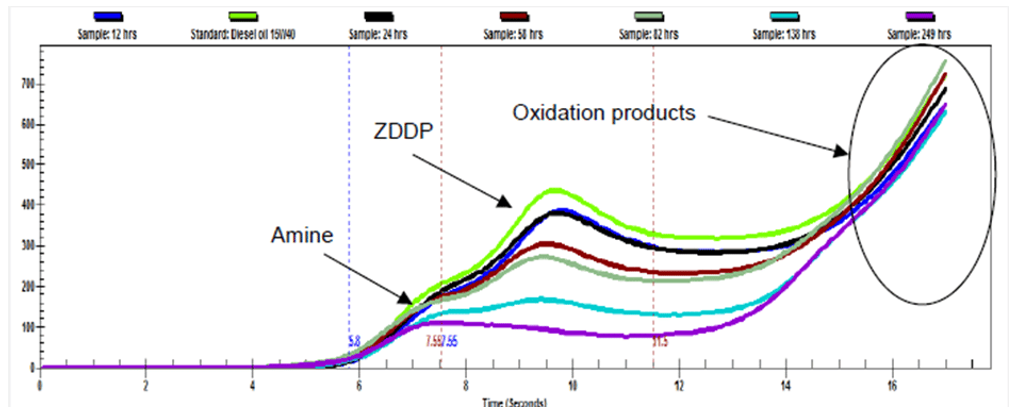
Figure 3: RULER Graph showing the presence of antioxidants
The key to using these analytical tools is to provide insight into what is happening inside the equipment, allowing us to determine whether any preventive action is needed.
By monitoring the quantities of these additives over time, we can easily establish whether oxidation is occurring, which can lead to varnish and overheating of the asset. We can also determine whether significant wear is occurring as the antiwear additives are depleted (confirmed by the presence of wear metals in the oil analysis). When monitoring your asset’s health, trending specific additive levels can also be very useful.
References
Eurofins. (2025, September 06). Annual Turbine Analysis. Retrieved from Eurofins Testoil: https://testoil.com/services/turbine-oil-analysis/annual-turbine-analysis/
Fluitec. (2022, September 29). Why is LSV Used for RULER Analysis? Retrieved from Fluitec: https://www.fluitec.com/2022/09/29/why-is-lsv-used-for-ruler-analysis/