
Moving Beyond Detection to Deliver Reliability
For maintenance managers and reliability professionals, identifying a problem is only the beginning. The real objective is preventing it from happening again.
In demanding industries with processing and manufacturing equipment that operate under high loads, harsh environments, and tight production schedules, when a gearbox, hydraulic system, or bearing fails, the cost extends far beyond replacement parts. Uptime, safety, and production are on the line.
Oil analysis plays a critical role in early detection. But when advanced diagnostics are applied, it becomes a powerful tool for root cause investigation.
Routine Testing Identifies the Symptom
Standard oil analysis parameters like wear metals, contamination levels, viscosity, oxidation, and particle counts are essential for trending and early warning. They answer important questions like: Is wear increasing? Is contamination entering the system? Is the lubricant degrading prematurely?
However, for reliability engineers tasked with eliminating repeat failures, elevated iron levels or rising particle counts just aren’t enough. Those results identify the symptom – not the failure mechanism.
Understanding the mechanism is what drives corrective action to prevent future problems.
Filter Debris Analysis: Examining What the Filter Captures
In high-load applications common in production and manufacturing operations, significant wear debris is often captured by the filter before it can be detected in a standard oil sample.
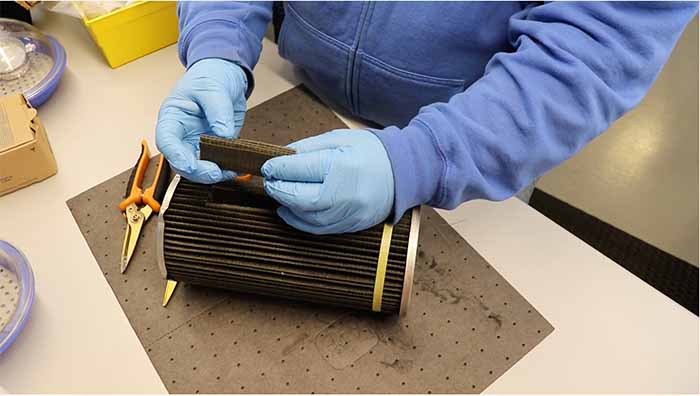
Figure 1 Filter Pleat Cutting for FDA Testing
Filter Debris Analysis retrieves and evaluates that trapped material, providing a clearer picture of active damage. Using Analytical Ferrography and Micropatch testing to examine particle size, morphology, and composition, analysts can determine whether the debris originates from rolling element fatigue, gear tooth spalling, severe sliding wear and even break-in conditions versus progressive failure.
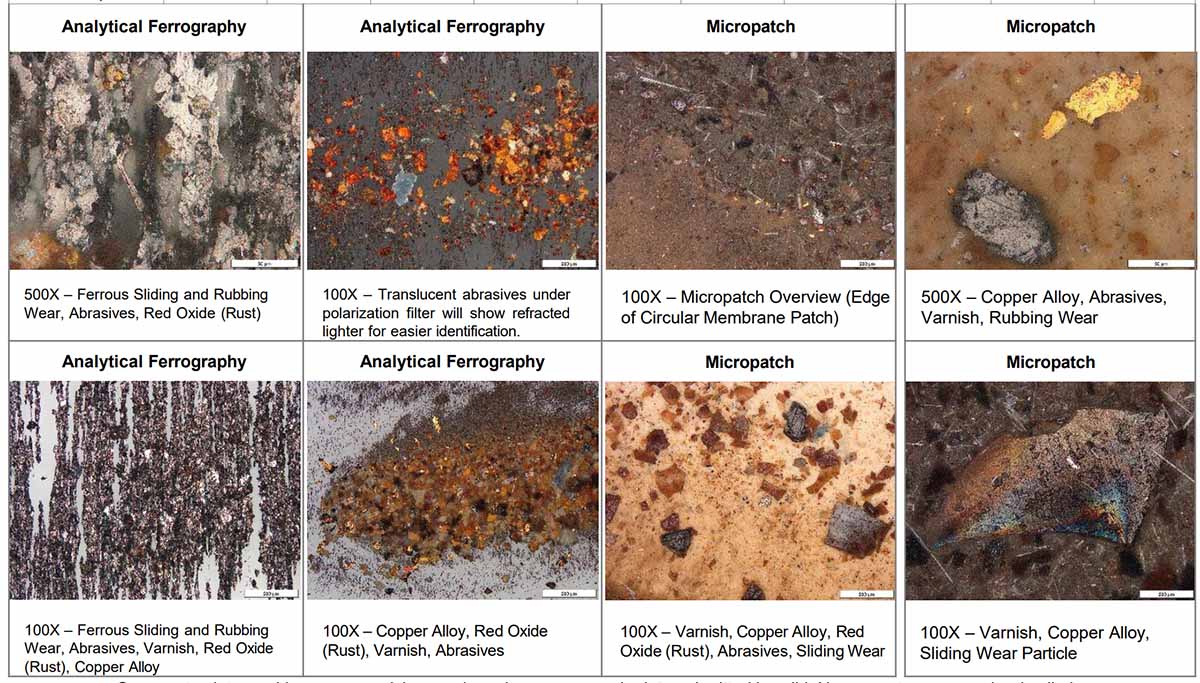
For a maintenance manager, this level of detail supports informed, smarter decisions; to continue operating under monitoring, schedule a controlled shutdown, or take immediate action. It replaces guesswork with evidence.
Define the Wear Mode
Analytical Ferrography testing uses magnetic separation and microscopic examination to characterize wear particles in detail. This method distinguishes between wear modes and can answer these questions:
Are wear particles caused by rubbing wear during normal operation?
Is it cutting wear caused by abrasive contamination?
Is lubrication film failure causing severe sliding wear?
Is it fatigue wear caused by surface distress?
Are chemicals causing corrosive wear?
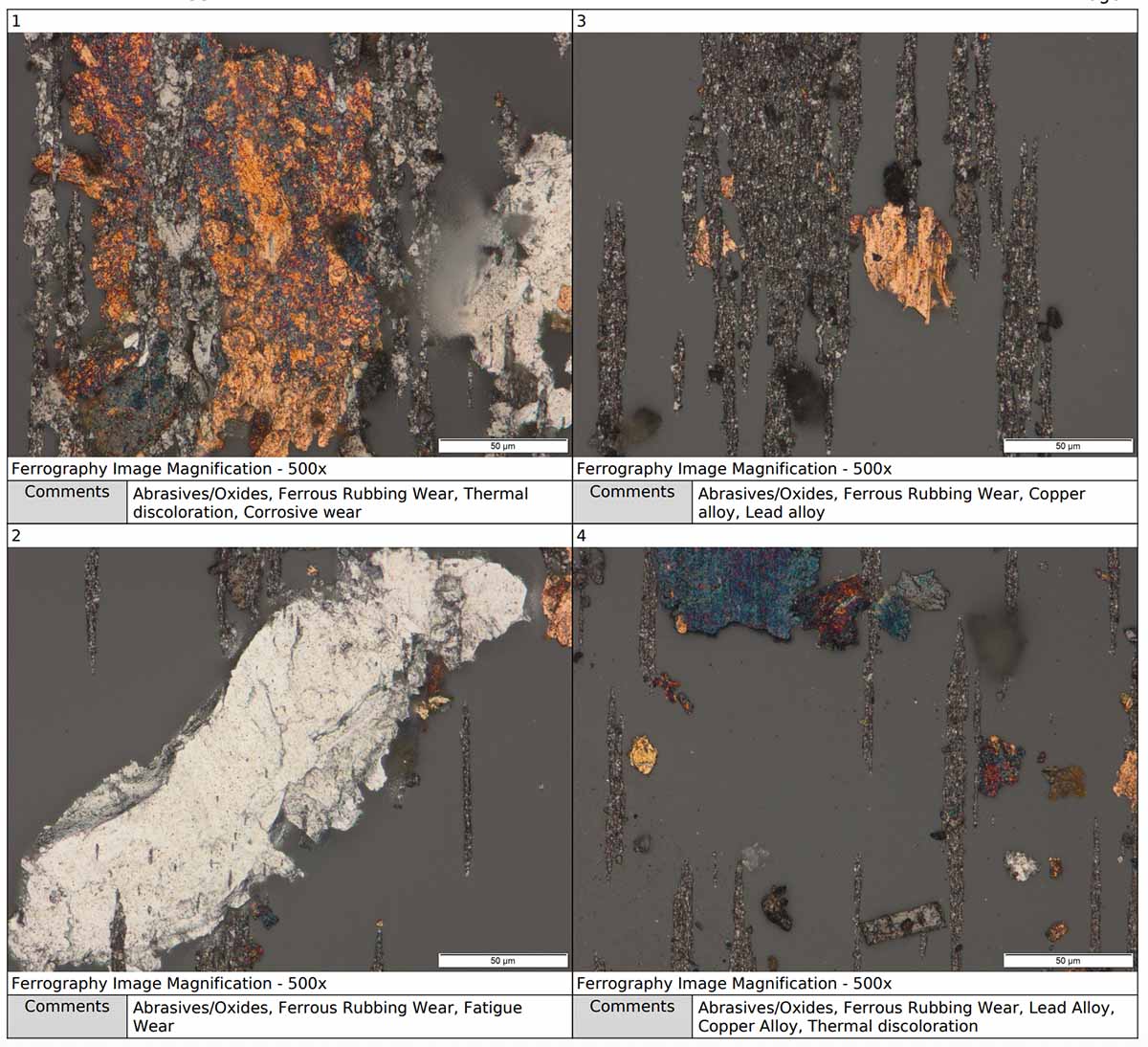
For facilities where contamination control and lubricant performance are critical, identifying the wear mode is often the turning point in a root cause investigation.
For example, severe sliding wear may indicate inadequate viscosity selection or excessive load. Cutting wear often traces back to contamination control deficiencies in breathers, seals, or overall maintenance practices. Fatigue wear may reveal misalignment or load distribution problems.
Without microscopic confirmation, these distinctions are difficult to make. With it, corrective actions become targeted and sustainable.
Microscopic Contaminant Identification: Finding the Entry Pathway
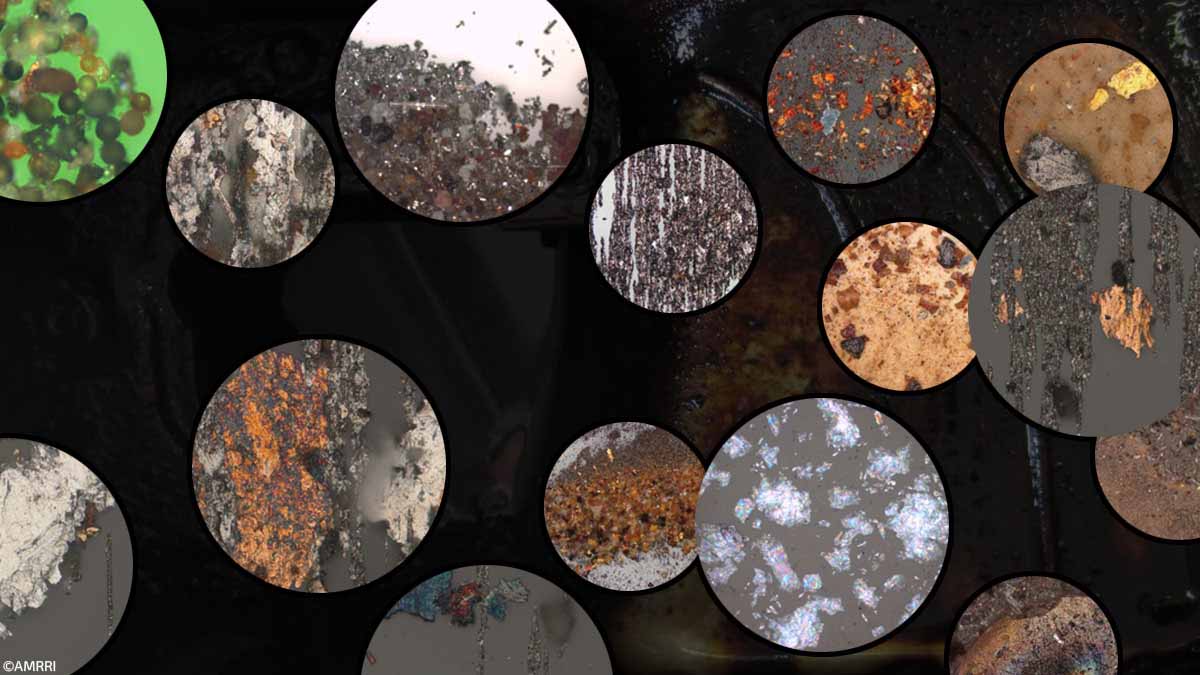
Contamination remains one of the leading root causes of equipment failure across all industries. Advanced microscopic analysis can identify:
- Silica from environmental dirt
- Process materials unique to processing and manufacturing facilities
- Fibers from filters or cleaning materials
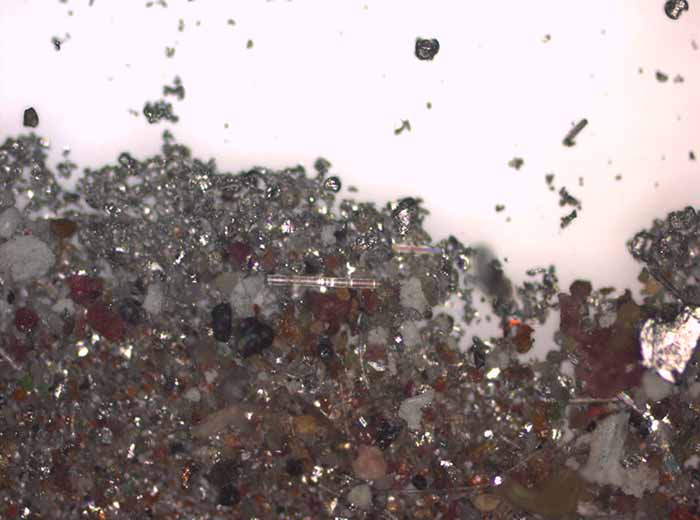
Figure 6 Glass fibers
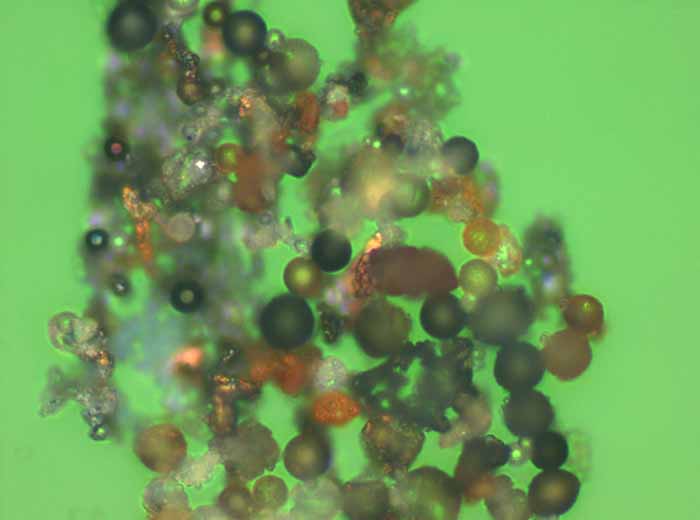
Figure 5 Fly ash
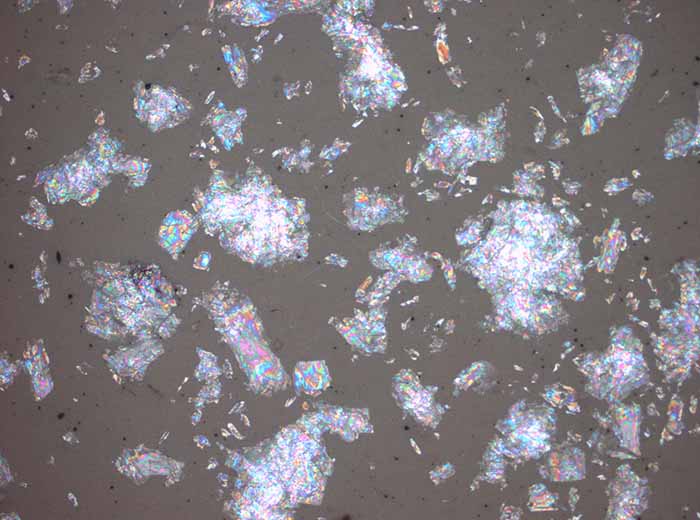
Figure 7 Seal or gasket materials
Reliability managers can use this information to address ingress points, refine storage and handling practices, or adjust filtration strategies. Instead of repeatedly changing oil, facilities can eliminate the source.
Turning Data Into Reliability Strategy
For reliability engineers, the goal is not simply monitoring machine health – it is building a no-surprises culture around asset performance.
Advanced oil analysis techniques such as Filter Debris Analysis and Analytical Ferrography transform a condition monitoring program into a diagnostic partnership. They provide evidence-based insight that supports root cause analysis, justifies maintenance planning decisions, and reduces repeat failures.
In high-demand production environments, that distinction matters.
Oil carries the story of what is happening inside your equipment. When you look beyond the numbers and examine the evidence, you move from reacting to failures to preventing them. And that is where real reliability gains are made.