

Oil analysis is widely recognized as one of the most potent tools in precision lubrication and reliability engineering. Yet, despite decades of industry experience, many organizations unknowingly undermine their effectiveness before the first sample is even taken.
A Real-World Example of a Hidden Oil Analysis Failure
Recently, we received an enquiry for an oil analysis call-off contract from a major industrial organization for their critical rotating machinery. The scope initially appeared comprehensive – until we examined the details. A closer review of the Scope of Work revealed a fundamental issue that, unfortunately, is becoming increasingly common across several industrial facilities.
The client attached the lubricant specification sheet, extracted directly from the OEM manual, assuming these parameters specified the tests to be performed on used oil samples during routine condition monitoring. When questioned regarding the selected oil analysis test package, the client reiterated that the OEM required the lubricant to meet the specifications stated in the Operation and Maintenance manual and therefore assumed that all such tests must be applied to used oil samples.
Where Oil Analysis Programs Go Off Track
This increasingly common assumption, observed in several recent cases, exposes a deeper industry-wide problem: a lack of understanding of what used oil analysis is intended to achieve.
New oil specifications and used oil analysis serve entirely different purposes.
OEM lubricant specification sheets are designed for one primary objective: To define the quality and performance requirements of fresh oil at the time of purchase and commissioning.
These specifications typically include properties such as:
- Viscosity grade limits
- Viscosity Index
- Flash point
- Pour point
- Density
- Rust-preventing characteristics
- Foaming characteristics
- Demulsibility
- Oxidation and ageing tests
- FZG or load-carrying capacity
All of these tests are essential – but only for qualifying new oil before it enters the system.
Once the oil is in service, the objective changes completely.
Used oil analysis is not about confirming what the oil was when it was new. It concerns understanding what is happening inside the machine at present.
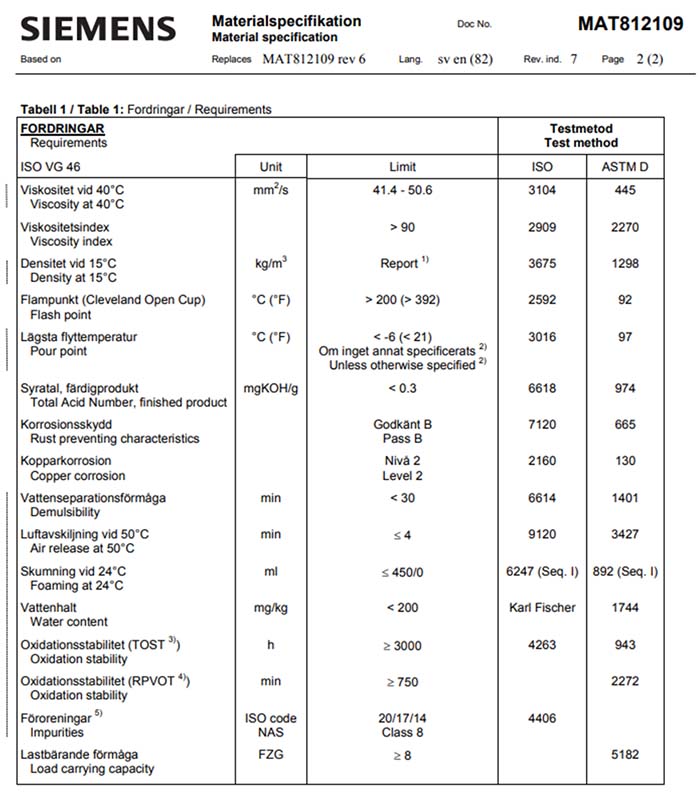
Figure 1: Example of Lube Oil Specification Sheet from a Steam Turbine Manual
Used Oil Analysis Is a Condition Monitoring Tool, Not a Compliance Checklist
In operating equipment – especially gas turbines, steam turbines, compressors, and hydraulic control systems – used oil analysis must answer particular reliability questions:
- Is the oil in healthy condition or degrading faster than expected?
- Is contamination entering the lubrication system?
- Are wear mechanisms developing inside bearings or gears?
- Is varnish or insoluble material forming?
- Are control valves, journals, or servo systems at risk?
Tests such as Pour point, Rust Prevention, Viscosity Index, or FZG ratings provide little to no actionable insight once the oil is in service. Meanwhile, critical failure mechanisms often go undetected when the wrong test slate is applied.
This is how organizations end up with beautiful laboratory reports but poor machine reliability.
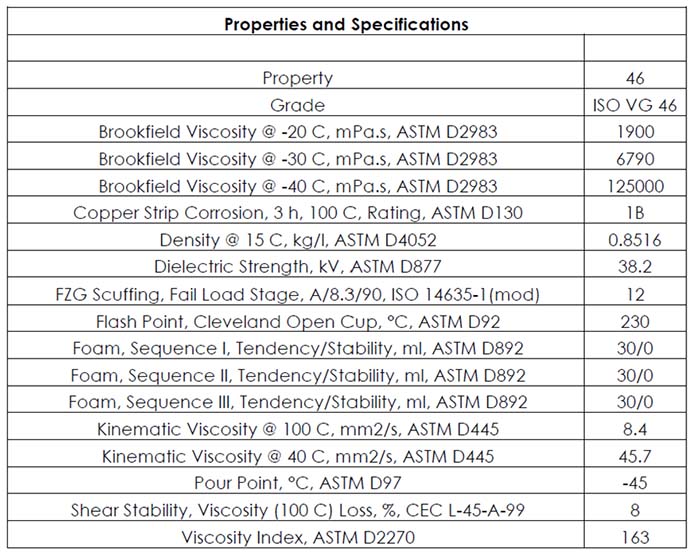
Figure 2: Control Oil Specification Sheet from a Steam Turbine Manual
What Goes Wrong When Spec Sheets Drive Your Oil Analysis Program
When OEM new-oil specifications are incorrectly used as an in-service oil analysis program, several things happen:
- Early failure indicators are missed
Parameters that actually trend degradation—such as varnish potential, water contamination, Particle cleanliness, and additive depletion—are either overlooked or underemphasized. - Oil analysis becomes reactive instead of predictive and proactive
Issues are detected only after alarms, trips, or component damage occur. - Lubrication decisions lose credibility
Maintenance teams receive reports that do not translate into clear actions, leading to distrust in oil analysis as a reliability tool. - Critical machinery reliability is compromised
Bearings, journals, and hydraulic components fail prematurely – not solely due to oil quality, but also due to poor visibility into oil condition.
The True Purpose of Oil Analysis
To simultaneously assess three conditions:
- Oil condition – how well the lubricant is holding up in service
- Contamination condition – what unwanted materials are entering the system
- Machine condition – what the oil is revealing about internal wear and distress of the machine.
When properly designed, an oil analysis program serves as an early-warning system, detecting degradation and failure mechanisms well before alarms, trips, or component damage occur.
However, this only works if the right tests are selected for the right purpose.
Before You Design an Oil Analysis Program, Audit Your Lubrication Practices
A robust oil analysis program should never be built by copying tables from OEM manuals.
Global best practice dictates that a Lubricant Benchmarking and Assessment Audit must precede the design of any oil analysis program.
A structured lubrication audit enables organizations to systematically identify gaps across all critical elements of machinery lubrication management.
- Lubricant Selection and Purchase
- Assess staff competency, training needs, and lubrication awareness
- Evaluate contamination control practices, including ingress prevention and filtration
- Review lubricant storage, handling, and dispensing methods
- Examine oil sampling practices and the condition monitoring program
- Verify machine-specific lubrication requirements and target cleanliness levels
Addressing these areas holistically ensures that oil analysis objectives are properly aligned with overall reliability and asset performance goals.
Oil Analysis Is Not a Lab Activity – It Is a Reliability Discipline
Oil analysis does not fail because laboratories lack capability. It fails because programs are often designed without a clear understanding of what needs to be detected, why it matters, and when it must be detected early.
The difference between oil analysis that merely reports numbers and oil analysis that prevents failures lies in program design, not testing volume.
More data doesn’t mean better reliability. Better questions do.
Oil analysis is one of the most powerful reliability tools available – when applied correctly. However, when new oil specifications are mistaken for used-oil condition monitoring, the entire purpose is undermined.
The industry does not suffer from a lack of data. It suffers from misaligned data.
Understanding the distinction between oil quality and oil condition is not a laboratory issue – it is a responsibility of reliability leadership.
Until that distinction is clearly understood, companies will continue to spend on oil analysis while still incurring unplanned downtime costs.