
Oil analysis is one of the most potent tools in proactive maintenance and asset management. However, its effectiveness depends fundamentally on one critical factor: the quality of the collected sample. Even today, many professionals still take samples directly from the equipment’s drain, a practical and quick method, but technically risky.
According to the evidence-based decision-making requirements of ISO 55001 and the specific guidelines of ICML 55.1, data quality is essential to ensure the reliability, traceability, and accuracy of asset health monitoring. In other words, if sampling is inadequate, the entire oil analysis program loses value.
The Problem: The Drain Is, by Nature, a Low-Representativity Zone
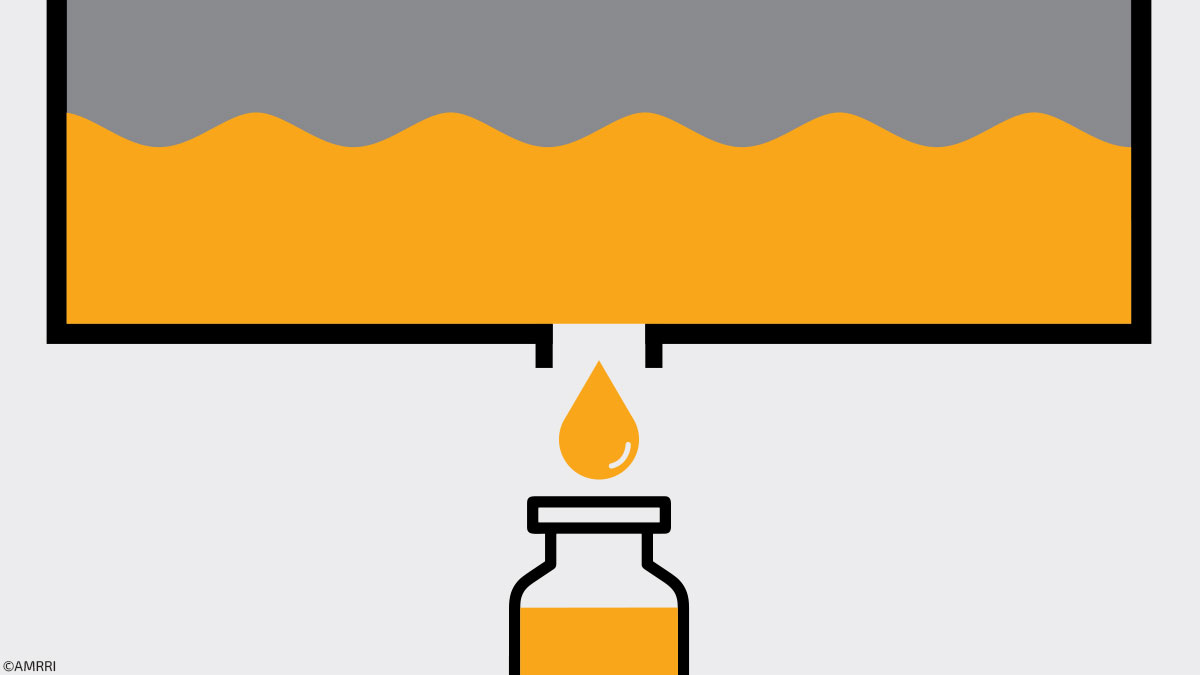
Every reservoir, sump, or tank has a region that naturally accumulates sediments, sludge, metallic particles, and insoluble residues. This area at the bottom of the reservoir is known as the dead volume.
This is where heavier particles settle out during natural precipitation, creating a highly contaminated environment that does not reflect the oil actually circulating in the system.
When sampling from the drain, the obtained sample:
- Represents the worst contaminants in the system, not the real operational condition;
- May indicate wear that is nonexistent or exaggerated;
- Compromises trend analysis;
- Generates false alarms and misguided decisions;
- Breaks process traceability, violating key principles of ISO 55001.
The conclusion is clear: sampling from the drain distorts reality and undermines the reliability of the analysis.
Two Key Objectives of an Effective Oil Analysis Program
According to ICML 55.1, every sampling program must be built upon two fundamental pillars:
1. Maximize the amount and quality of extracted information
The sample must represent actual operating conditions, which is only possible when collected:
- in a live zone,
- with oil actively circulating,
- at points that ensure turbulence and proper homogenization.
The sampling point is just as important as the laboratory analysis itself. ISO 55001 reinforces that decisions must be based on reliable, comparable, and consistent data, which depends directly on the sampling method.
2. Minimize external factors that may alter the sample
An effective program requires:
- standardized procedures;
- repeatability;
- trained personnel;
- proper tools;
- strict control against direct or cross-contamination.
These criteria are part of ISO 55001’s operational control and risk-management requirements, which require that critical processes be executed in a disciplined, documented manner to avoid variables that compromise asset reliability.
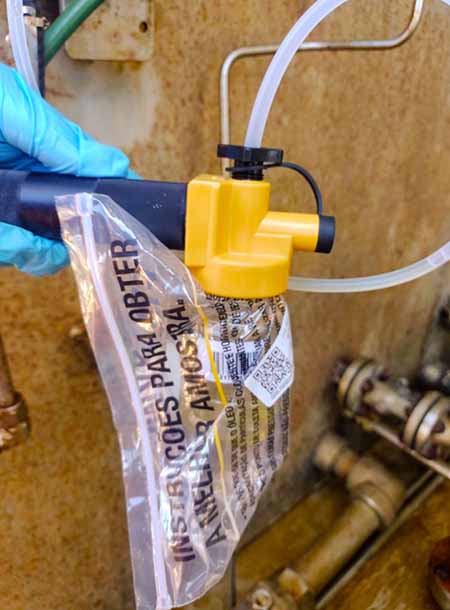
What About Hose-Immersion Oil Sampling?
Although widely practiced, hose-immersion sampling is considered by ICML 55.1 to be a low-precision method, acceptable only when the objective is to analyze the oil’s physical-chemical properties — that is, its chemical health.
However, for analyses such as:
- particle contamination,
- wear,
- external intrusion,
- failure trends,
This method becomes inadequate. The hose may:
- introduce internal or external contaminants;
- drag particles from surfaces that do not represent real flow;
- create variation between consecutive samples;
- reduce data reliability.
In summary, for condition monitoring and failure diagnosis, hose-immersion sampling does not meet representativity requirements.
The Solution: Oil Sampling Points Designed for Reliability
To ensure accurate results aligned with international best practices, the solution involves:
Redesigning sampling points
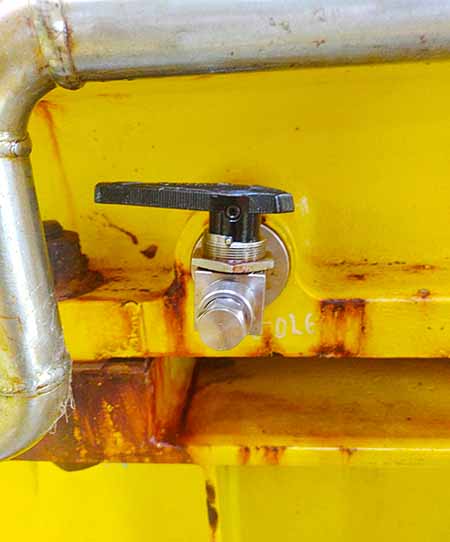
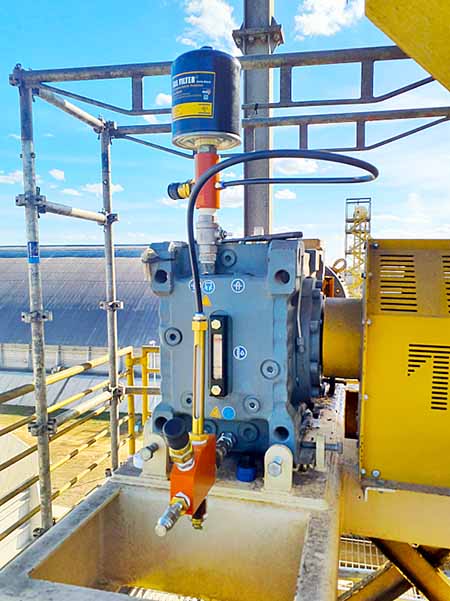
Installing sampling valves at strategic flow locations, preferably:
- on pressurized lines,
- before filters,
- after pumps,
- in high-turbulence zones.
Ensuring sampling from a live zone
The goal is to collect oil that truly represents what the equipment is processing during operation.
Standardizing procedures
According to ISO 55001 and ICML 55.1 principles, standardization reduces risk, increases predictability, and supports data-driven decision-making.
Training teams
No technology replaces human competence. Continuous training is an essential part of asset governance.
Proper Oil Sampling Is Not a Detail, It Is a Strategic Requirement for Asset Management
Oil analysis reliability begins long before the laboratory: it starts at the sampling point.
Samples taken from the drain or via hose immersion compromise not only the quality of results but also the organization’s ability to monitor assets, prevent failures, and make informed decisions, violating fundamental reliability and asset-management principles established by ISO 55001 and ICML 55.1.
By correctly designing sampling points and standardizing procedures, your organization:
- improves analysis representativity;
- reduces operational risks;
- increases asset availability;
- strengthens the reliability culture;
- makes faster and better-supported decisions.
Sampling is a strategy. It is risk management. It is reliability.
And it all begins with a single but decisive step: sampling from the right place.